The out-of-conference portion of the 2025–26 college basketball season is largely in the books, and with teams over 40% of way through their schedules, this is a natural moment to take stock of where things truly stand as we enter 2026 and into conference play.
Player of the Year Race: Early Separation, Plenty Still in Play
With nearly half the season complete, Player of the Year remains fluid — but not wide open. The ADJeff numbers already show meaningful separation among players who have produced against real schedules.
The current POY tier includes:
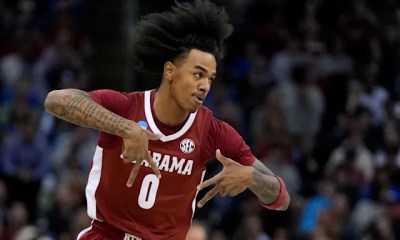
- Labaron Philon (Alabama) — The early ADJeff leader, combining usage, efficiency, and defensive impact.
- Yaxel Lendeborg (Michigan) — The anchor of the No. 1 team, consistently dominant on both ends.
- JT Toppin (Texas Tech) — Already banked major value against one of the nation’s toughest schedules.
- Cameron Boozer (Duke) — Living up to expectations with elite two-way production.
Purdue — The Boilermakers have 3 players in the top 25 of ADJeff that cannibalize each others case. Conference play will matter here. Players who haven’t faced real resistance yet will need to prove it, while those who already have are starting with a head start. A top tier of 4 fo Philon, Lendenberg, Toppin and Boozer has emerged.
Player of the Year Checkpoint: Yaxel Lendeborg Has Earned It (So Far)
Through the out-of-conference portion of the season, Yaxel Lendeborg has been the best player in college basketball — and yes, I’m as surprised as anyone to be writing that.
The shift to playing more minutes at the wing / small forward has clearly unlocked his game. With capable defensive bigs beside him and behind him, Lendeborg has been freed to operate in space offensively while having his defensive limitations quietly covered. The result has been a player who is more efficient, more versatile, and far more impactful possession-to-possession than at any point earlier in his career.
Simply put, he’s been awesome.
From an ADJeff standpoint, Lendeborg has delivered elite value against a real schedule, consistently impacting scoring efficiency, rebounding, and overall flow without needing to dominate the ball. His comfort on the wing has allowed him to attack mismatches, finish efficiently, and contribute without being exposed defensively — a combination that didn’t previously exist in his profile.
There is, however, one legitimate caveat. The efficiency level driving this breakout may not be fully sustainable. Lendeborg is currently operating at a .736 true shooting percentage, a massive leap from his previous baseline. For context, he posted a .592 TS% against a 140 SOS last season, and sits at .602 TS% for his career against mid-major competition. That kind of jump almost always invites regression toward the mean, and his game-to-game consistency has reflected that volatility at times.
If that efficiency slips, the margin tightens — and the Player of the Year race likely does too.
But this is a checkpoint, not a projection. Through OOC play, no player has provided more value, and no one has better combined production, context, and impact to this point. If awards were handed out today, Yaxel Lendeborg would deserve the trophy — even if the rest of us are still adjusting to that reality.
Projected 2025–26 All-America Teams (Post OOC Snapshot)
First Team All-America
Second Team All-America
Third Team All-America
Honorable Mentions
The Perception Gap: When Value Doesn’t Match the Narrative
One of the clearest takeaways from the OOC portion of the season is how wide the gap remains between actual on-court value and national perception. Advanced metrics make this obvious, and a few players stand out as the clearest examples.
Oscar Cluff has arguably been Purdue’s best player this season, even if that won’t be the prevailing national opinion. His ADJeff profile reflects elite efficiency, consistent two-way impact, and real production against legitimate competition. Yet because his value isn’t built on highlight moments or gaudy counting stats, he’s unlikely to be discussed as a national headliner — and may not even land on an All-America honorable mention ballot. That disconnect says more about how awards are framed than how Cluff has actually played.
A similar case can be made for Braden Huff at Gonzaga. Quietly, Huff has been more impactful than Graham Ike through the OOC slate when adjusting for efficiency and opponent quality. His ability to, finish efficiently, and contribute without dominating usage has translated to higher overall value in the data. Still, perception will almost certainly lag reality here, and Huff is far more likely to be overlooked than rewarded when All-America teams are announced.
Then there’s Keyshawn Hall at Auburn, whose individual performance has been excellent despite Auburn’s uneven team results. Hall has consistently graded out as one of the more productive forwards in the country, but team success — or the lack of it at the level needed— often dictates individual recognition. That reality makes Hall’s path to national honors far steeper, even though his level of play has been deserving.
These cases underscore an important point as conference play begins: banked value matters, even if it doesn’t fit neatly into existing narratives. As the season progresses and competition stiffens, players who have already produced efficiently against real schedules are starting from a stronger foundation — whether the perception catches up or not.
The Big Picture: Team Landscape Entering League Play
The True Top Tier
At the top, Michigan, Gonzaga, Arizona, Duke, Iowa State, and Purdue have clearly separated themselves as the most complete teams through OOC play. These programs have combined elite efficiency, strong wins, and roster depth that translates across matchups.
- Michigan sits at No. 1 thanks to balance, interior dominance, and multiple players grading extremely well in ADJeff.
- Gonzaga continues to look like the most reliable non-power conference contender, with elite frontcourt production and consistent efficiency.
- Arizona and Duke both blend high-end talent with strong early résumés, while
- Purdue remains a machine behind elite interior play and one of the most impactful guards in the country.
Just behind them, UConn, Michigan State, Houston, and BYU form a second tier that looks capable of winning a national title if things break right in March.
Conferences at a Glance
Big Ten:
Michigan, Purdue, Michigan State, Illinois, Iowa, and Nebraska have all shown legitimate upside. The league again looks deep, physical, and matchup-driven — not flashy, but dangerous in the tournament.
Big 12:
Arizona, Iowa State, Houston, BYU, Kansas, and Texas Tech form the strongest top-to-bottom conference group in the country. Texas Tech in particular has already banked serious value against real competition.
SEC:
The league has volume, but also variance. Alabama, Vanderbilt, Tennessee, Kentucky, and Arkansas have shown flashes, while others (notably Georgia) still lack meaningful résumé opportunities. SEC play should clarify a lot — fast.
ACC:
Duke is the clear headliner, with North Carolina and Louisville in pursuit. The depth is thinner than in recent years, but the top-end talent remains real.
Big East:
UConn remains the standard, while St. John’s has quietly built one of the better early résumés in the league.
Conference Power Rankings: Where the Leagues Stand Entering Conference Play
With the out-of-conference schedule essentially complete, conference-level résumés are now largely set. While individual team movement will continue during league play, the relative strength of each conference is effectively locked in before the NCAA Tournament, barring something truly unusual. At this stage, NET-based results give us a reliable snapshot of how each league has performed collectively against the rest of the country.
NET Conference Rankings (Post-OOC)
1. Big 12 (157–38, .805)
The Big 12 has clearly separated as the nation’s strongest conference. Arizona’s elite performance anchors the league, but the depth is what truly stands out. Top-to-bottom quality, consistent non-conference wins, and minimal bad losses give the Big 12 the best overall résumé entering league play. This is the standard every other conference is chasing.
2. SEC (144–50, .742)
The SEC lands comfortably in the No. 2 spot, driven by volume and competitiveness. Vanderbilt’s strong early showing highlights the league’s upper tier, while several other teams remain capable of banking résumé wins once conference play begins. The SEC may lack the Big 12’s top-end efficiency, but its breadth keeps it firmly in the title conversation.
3. Big Ten (142–39, .785)
The Big Ten’s win percentage is elite, and Michigan’s rise to the top spot nationally underscores how strong the league’s ceiling is. While the middle of the conference will sort itself out in league play, the Big Ten has already proven it can win consistently across matchups, positioning it well for March.
4. ACC (171–55, .757)
The ACC’s overall record is strong, but the league remains more top-heavy than in recent seasons. Duke has carried the banner with an elite OOC résumé, while a handful of teams sit in the “good but not dominant” tier. Conference play will determine bid volume, but the ACC’s top end is clearly legitimate.
5. Big East (87–34, .719)
The Big East continues to punch above its weight, anchored once again by Connecticut. While the league doesn’t have the same depth as the power conferences above it, its top teams are battle-tested and dangerous in a tournament setting — a familiar Big East profile.
6. Mountain West (75–45, .625)
The Mountain West remains the strongest non-power conference in the country. Utah State’s résumé leads the way, and the league’s collective results suggest multiple teams capable of earning at-large consideration. As usual, the Mountain West’s internal grind will matter for seeding more than selection.
7. West Coast Conference (84–57, .596)
The WCC remains heavily top-driven, with Gonzaga again carrying the league nationally. While the overall depth lags behind the Mountain West, the top of the conference is proven, and that alone keeps the WCC firmly in the conversation.
8. Atlantic 10 (107–58, .649)
The A-10 has quietly put together a strong OOC showing, led by Saint Louis. The league’s efficiency suggests it’s closer to the Mountain West than the lower mid-major tiers, and conference play will determine whether it pushes toward multiple bids or consolidates around its top teams.
9. Missouri Valley (61–46, .570)
The MVC sits in familiar territory — competitive, disciplined, and capable of producing a dangerous tournament team. Belmont’s early results have been the highlight, but the league will likely need a standout conference champion to earn national traction.
10. American Athletic (80–70, .533)
The AAC rounds out the top ten, with Tulsa carrying much of the league’s early momentum. The margin for error here is thin, and conference play will be critical for separating true contenders from bubble hopefuls.
Mid-Majors: Who’s Actually Legit?
Among non-power programs, a few teams have already separated:
- Gonzaga remains the gold standard.
- Utah State and Saint Mary’s both look like real second-weekend threats.
- Saint Louis has played well enough to demand national attention.
- Boise State, VCU, Akron, and San Diego State headline the next tier of dangerous tournament teams.
This group will be fascinating to track as league play either validates — or exposes — early efficiency.
Freshmen Check-In: Who Has Actually Delivered So Far
Roughly a third of the season in, the freshman class is beginning to separate into tiers — not based on recruiting rankings or preseason expectations, but on actual on-court value adjusted for competition. Using ADJeff ratings, which account for efficiency and strength of schedule, several first-year players have already proven they can contribute at a high level against real opponents.
At the top of the list is Cameron Boozer (Duke), who has been exceptional from day one. Boozer’s ADJeff rating places him not just among the best freshmen in the country, but among the best players overall. His combination of scoring efficiency, rebounding, and two-way consistency has translated immediately, and he’s already playing like a high-level All-American rather than a typical freshman.
Right behind him is AJ Dybantsa (BYU), whose impact has been felt across multiple areas. Dybantsa’s offensive versatility and ability to scale production against stronger competition stand out, especially given the offensive load he carries. His value has held up against quality opponents, which is often where freshmen numbers begin to crack.
The next tier features Caleb Wilson (North Carolina) and Keaton Wagler (Illinois), two freshmen who have quietly become foundational pieces for their teams. Neither relies purely on usage-heavy scoring, but both have graded extremely well in efficiency and overall impact — the kind of profile that tends to age well as conference play ramps up.
David Mirkovic (Illinois) has also shown why he was so highly regarded, producing consistently while fitting into a system with established pieces. His value comes from reliability rather than flash, which often goes underappreciated in early-season narratives.
Beyond the headliners, several freshmen deserve recognition for already outperforming expectations:
- Hannes Steinbach (Washington) has translated physically and statistically faster than most.
- Amari Allen (Alabama) has provided real value in a crowded rotation.
- Darius Acuff Jr. (Arkansas) and Kingston Flemings (Houston) have shown they can contribute without being protected by soft usage.
- Massamba Diop (Arizona State) and Acaden Lewis (Villanova) have been solidly productive in defined roles.
- Koa Peat (Arizona) rounds out the group as a freshman whose efficiency suggests a larger role may be coming.
The broader takeaway is encouraging: this freshman class is already making a measurable impact. While not all of these players are being treated as national names yet, the data suggests several are well ahead of the normal freshman development curve, and conference play should only sharpen the separation between hype and real value.
True Mid-Major Standouts Worth Tracking
Beyond the power conferences, a handful of true mid-major players have already posted impact numbers that hold up even after adjusting for strength of schedule. These are not high-major transplants or name-brand programs — just players who have clearly separated themselves through production.
Jack Karasinski (Bellarmine) leads the group, grading out as one of the most efficient and valuable players in the mid-major landscape. His ADJeff profile reflects consistent impact on both ends and production that scales beyond conference context.
Teagan Moore (Western Kentucky) has been a steady, high-value contributor, providing efficiency and reliability without needing volume-heavy usage — a profile that often translates well into March.
Jackson Holcombe (Utah Valley) and Jaquan Johnson (Bradley) round out the list as players who have quietly driven their teams’ early success. While they may not generate national buzz, their value is real and measurable.
As conference play begins, players like these often become the backbone of dangerous tournament teams — even if the spotlight arrives late, if at all.
What Comes Next: Conference Play Will Decide Everything
This checkpoint is exactly that — a snapshot. Strength of schedule disparities still matter, and some teams simply haven’t had the opportunity to show their ceiling yet. Others, however, have already banked real value that shouldn’t be ignored.
As conference play begins:
- Elite teams will be tested weekly.
- Soft résumés will be exposed quickly.
- And Player of the Year conversations will sharpen fast.
The next month will tell us whether early leaders can sustain — or whether new names are about to force their way into the national picture.
One thing is already clear: the separation has begun.