Every offseason, national sites roll out their transfer rankings — and every year, those lists shape the narrative. Did your team win the portal? Did they land enough “names”? Did they make the splash that moves the needle?
But what happens when you strip away the storylines? When you ignore the recruiting pedigree, the name recognition, and the built-in branding of a high-major jersey?
What if we just follow the numbers?
Because the numbers don’t care about five-star labels or where a player started his career. They don’t care about hype. They care about performance — possession by possession, minute by minute.
That’s the approach behind our transfer rankings: an analytics-first model built on efficiency, per-possession value, strength of schedule, and player role. It doesn’t project based on reputation. It reflects what’s happened on the court — and adjusts for the context in which it happened.
And the results? Some names shoot up the board, far above their consensus ranking. Others — the so-called “can’t-miss” portal prizes — come with some serious red flags. It doesn’t mean they won’t succeed, but the data says it’s far from a sure thing.
We’re not here to call out specific outlets or nitpick someone else’s list. We’re here to show where statistical reality and public perception diverge — and why.
We’ve tried ranking players manually before. It’s hard. You’re juggling dozens of factors, and human bias always finds a way in: recency bias, confirmation bias, star bias. That’s why we built a metric — a guiding framework that levels the playing field and removes the guesswork.
Because the truth is, most mid-major-to-high-major jumps come with a drop in efficiency. Especially for players from leagues outside the top 20. The numbers show it again and again — and yet, every spring, those trends get overlooked in favor of familiar names.
Too often, national rankings lean on scouting reports from when players were 17, ignoring hundreds of college minutes that tell a very different story. And too often, the players who hit the portal aren’t rising stars — they’re guys who couldn’t carve out a role, or who coaches were ready to move on from.
That’s not to say there’s no upside. Portal success stories are real. But if you’re betting on pedigree without production, you’re ignoring the clearest signals we have.
So today, we’re cutting through the noise. No narratives. No nostalgia. Just the numbers — and what they actually tell us about this year’s transfer class.
Overranked vs Underrated
The portal era gives everyone a chance to play scout, but the national rankings still miss — and sometimes, by a mile. Below are a few names my model rated significantly higher (or lower) than the consensus. As always, this isn’t about narratives or hype — just data, production, and context.
(click player names for stats)
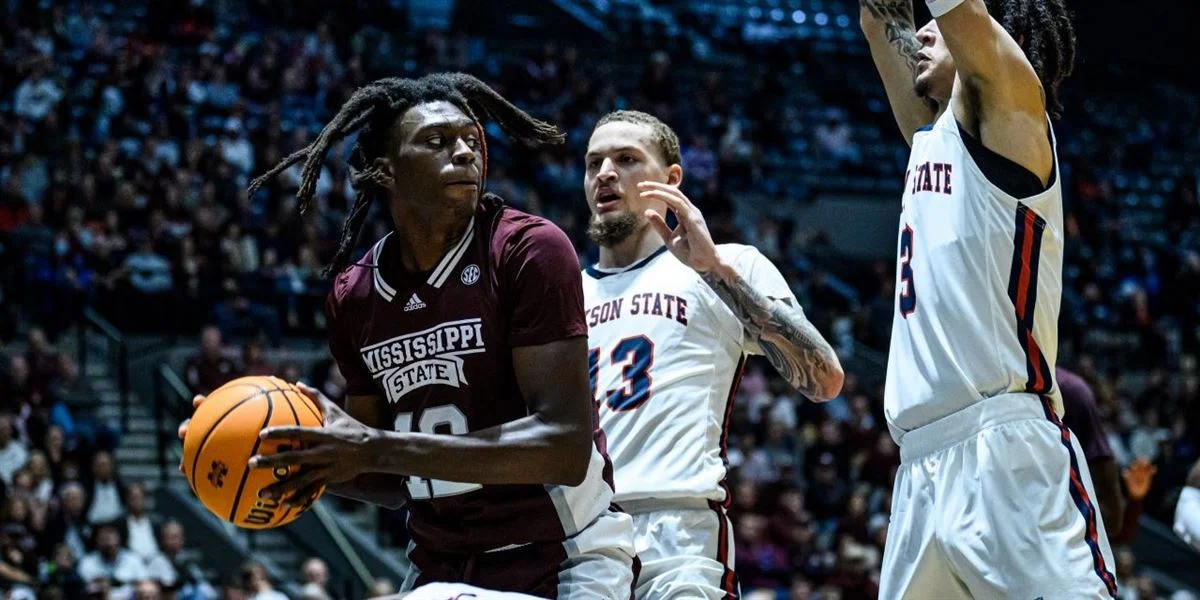
Murray wasn’t listed at all by some major outlets and didn’t crack the top 100 anywhere. My model had him No. 2 overall. He posted a 25 PER against a top-20 strength of schedule, with elite usage, scoring efficiency, and defensive impact. Mississippi State’s second-best defender (behind Cam Matthews) now heads to Auburn, where he’ll be a high-usage centerpiece. This was a massive whiff by consensus rankings.
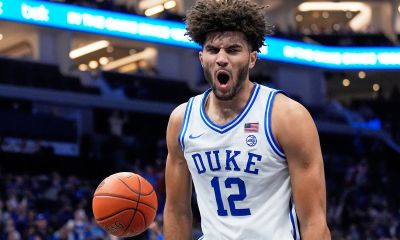
Payne was ranked between 27th and 58th by various outlets, but my model had him No. 4 overall. He was dominant per minute against a top-10 SOS, scoring efficiently, rebounding, and anchoring the paint. If Maryland gives him real starter minutes, he’ll shine — but Buzz Williams’ tendency to rotate heavily might limit that.
Edwards was unranked by some and as low as 65th elsewhere, yet I had him No. 4 in the country. He averaged 27 points per 40 minutes on 58% true shooting in the SEC — often off the bench. No other scorer in the portal combined that volume and efficiency against elite competition. If Cooley lets him cook, he could be a Big East scoring leader.
Ewin ranked around 90th nationally, but I had him 15th. He was my No. 1 JUCO prospect before transferring to Florida State and proved he could produce in the ACC. At Arkansas, he’ll be part of a crowded frontcourt, but his efficiency and physical tools suggest impact — even in limited minutes.
Udeh hovered in the 80s in most rankings, but he came in 16th for me. At TCU, he had a 97 defensive rating — best on the team by six points — and shot 64% true shooting. He doesn’t need touches to be elite defensively. The Miami fit isn’t perfect with Malik Reneau, but Udeh brings real value.
Lee was ranked as high as 25th nationally, but I had him 147th. His raw stats dipped last year and his efficiency stayed flat. He’s a good passer and rebounder for a guard, but expecting him to replace Walter Clayton’s production at Florida seems optimistic. He’s more of a glue guy than a go-to guy.
Thomas landed in the top 20 on several lists, yet I had him just 94th. The issue? He played huge minutes — among the highest in D-I — and his production didn’t scale with it. His per-possession output was mediocre, with low 3-point volume and minimal rebounding. LSU may have overreached here.
Ranked in the top 30 nationally, McKneely came in at 81st for me. A nice shooter, but limited otherwise. His impact at Virginia was marginal, and the team underachieved despite his expanded role. At Louisville, he’ll be useful, but this is a stretch as a top-tier transfer.
Sanon cracked the top 30 nationally, but I had him 92nd. He started strong for Arizona State before fading late. The numbers were solid — 12 points per game, 37% from deep — but the sample was small and inconsistent. St. John’s is hoping for a breakout, but this ranking feels premature.
Some outlets ranked George as high as 23rd, and as low as 47th. I had him 163rd. His 50.3% true shooting doesn’t move the needle, especially once you adjust for Georgia Tech’s relatively weak schedule. His assist numbers are solid, but his defense and scoring were well below average. This is a projection play for Syracuse, not a production bet.
There are always going to be disagreements when projecting hundreds of players switching teams. But when the gap is this wide — from top 25 to outside the top 100 — it’s worth asking why. My rankings aren’t based on rep or recruiting pedigree. They’re based on what happened on the court. More often than not, the numbers tell the truth.
More Underrated
The biggest discrepancies are fun — but my model also caught plenty of value in less obvious places. Here’s a deeper look.
No surprise here — I have Freeman all the way up at No. 7, while national lists mostly put him in the 30s. I think they’re missing it. Freeman is a strong shot-blocker with real defensive instincts. Iowa didn’t fully maximize his skill set, but Creighton will. He’ll step into a drop coverage system that made Ryan Kalkbrenner a star. With better structure and spacing, Freeman should thrive, especially offensively.
I have White inside my top 20, while most national outlets slot him in the 60s. Now at Kansas, he finally played winning basketball last year — and his True Shooting jumped to 62% against an extremely tough defensive schedule. That’s a real sign of growth. If the efficiency holds, he’ll be a major piece for Bill Self right away.
Luis might be the most underrated player in the class. I’ve got him at No. 6 overall among transfers, while national lists have him around 14 at best — often lower. His late-season benching in the NCAA Tournament hurt his reputation, but the production is undeniable: 18 points and 7 boards per game in a power conference. His efficiency and all-around game suggest he should be near the very top of any ranking.
I rank Jackson 26th, yet he shows up between 60th and completely unranked nationally. That’s a miss. At Iowa State, he played only 19 minutes per game but was a major reason they had one of the country’s best defenses. His efficiency stayed elite even in Big 12 play. When he played starter minutes at Charlotte and Washington State, he proved he could sustain it. Pitt landed a steal here — box scores don’t do him justice.
More Overranked Picks
Not every miss is an underrated player. Some guys are just getting hyped beyond their actual production.
This one’s a head-scratcher. I have him 163rd in the model, yet he’s ranked as high as 90th nationally — and just signed with Indiana, likely for a significant NIL deal. His profile isn’t strong: 6’3″ guard, 54% true shooting, 27% from three, a weak assist-to-turnover ratio, and he played against the 189th-ranked schedule at Troy. Even his best stat — 60% finishing at the rim — is questionable against Big Ten defenses. Plus, he shot just mid-60s from the free throw line for his career. There’s projection here, but not much statistical foundation.
DeVries is getting plenty of national love — some even have him top 10 — but I have him at 45. I’m using his data from two years ago since he missed almost all of last season. Solid player, good shooter and creator, but the elite-level impact others are projecting isn’t fully there in the numbers. If he’s Indiana’s first option, that’s likely more in the 50th-best player range — closer to where Drake was ranked nationally — not top 10. And that’s assuming he’s fully healthy, which isn’t a lock.
Hopkins is a tough one to peg. Nationally, he was considered a top-15 guy before his injury, and I’ve got him ranked 37th, based on his pre-injury numbers. However, with his ACL recovery, it’s unclear what we’re getting. If he returns to form, he might be a solid contributor, but I wouldn’t bet on him being one of the top players in the country. There’s definite upside, but the risk is just as real. A significant health gamble for Rick Pitino at St. John’s.
I’ve always been a little lower on Cadeau than others, and national rankings reflect that, with most keeping him in the 30s and 40s, while I have him at 74th. His size and lack of a consistent jumper remain concerns. Bringing in a pass-first point guard to run an offense already featuring a dominant Yaxel seems misaligned with what Michigan needs. He may be a solid player, but his fit and skills don’t justify such a high ranking.
Isaacs is transferring from Creighton to Houston, and while he’s ranked as high as 30th in some places, I’ve got him at 88th. His high-usage, low-efficiency style of play isn’t what Houston typically thrives on. He doesn’t bring the same balance that Cryer did last year. Unless Isaacs significantly improves his shot selection and decision-making, he’s likely better off in a smaller role. The talent’s there, but I’m not sold on him meeting Houston’s high expectations.
Evans is another transfer ranked much higher than my model suggests. Nationally, he’s often in the top 40, but I have him ranked around 159th. Sure, he’s a sharp shooter with a solid 44% from three at Colorado State, but he’s not a high-usage star. His fit at UNC could be perfect, where he can focus on shooting threes in a specific role without being asked to do too much. Still, ranking him as a top-40 player seems excessive.
Pasha is another transfer with a big gap between national rankings and my model. National outlets have him as high as 88th, but I have him at 300th. His numbers just don’t back up the hype. He shot poorly from three (19 made last season) and posted a subpar assist-to-turnover ratio against a weak schedule at Delaware. Without much impact on either end of the floor, I don’t see him cracking the top eight in a solid ACC rotation. Virginia Tech’s interest here suggests how much the program has slipped.
Bethea is ranked around 36th-53rd in national transfer rankings, but I’ve got him all the way down at 229th. The hype here seems based more on his high school pedigree than any actual production. He struggled to get on the floor for a 7-win Miami team and didn’t perform when he did. With an 11 PER and minimal impact at the mid-major level, he’s more reputation than results right now. Betting on upside is one thing, but at some point, production has to matter.
Williams is ranked in the 30s nationally, but I have him at 229 in the model. He averaged 9 points on a Tulane team that finished around 140th in the country. While he has tools — size and athleticism — he hasn’t put it together yet. The idea that he’s ready to play a significant role at Kentucky feels like a stretch. Perhaps he carves out minutes as a role player down the line, but right now, he looks more like a depth piece than a game-changer.
Pozzato shows up as high as 59th, 61st, and 73rd in the national rankings, but he didn’t crack my top 250. He’s not bad, just more of a role player. He posted a 15 PER in the MVC and can shoot a bit as a stretch 4, though he’s undersized for that role. If he lands in a system that can hide his limitations and let him space the floor, he can be useful. However, he’s not the type of player you build a team around, and I don’t see him justifying those high rankings, especially at Xavier where he wasn’t even a standout in the Missouri Valley.
Moore shows up as high as 72nd in the national rankings, but I’ve got him just outside my top 250. He’s a shooter, and that gives him value as a role player, but that’s pretty much it. He transferred from Montana, where he averaged 12 points with a 16 PER — not bad, but not spectacular either. He faced solid competition, and the team was good, which helps his case. Still, he’s a one-trick pony right now. If his shot isn’t falling, he won’t offer much else. Not sure he’s top 75 material.
Bashir is ranked 58th and 66th nationally, but he’s not even in my top 250. He’s headed to Kansas State, and I just don’t see it. Standing 6’7″ and grabbing just 2.6 rebounds in 33 minutes is a major red flag. At just 160 pounds, his physicality is a liability. He can shoot threes, but that’s about it. If he’s a role player spotting up, fine. But if he’s expected to be a high-usage guy, the ceiling drops fast. His 15 PER against a weak schedule at Monmouth doesn’t inspire confidence in his ability to thrive in a more competitive environment.
Pascarelli somehow cracked the top-100 rankings nationally, but he played against one of the weakest schedules in the country and posted a 16 PER. That’s not enough to buy in. His lack of competition and mediocre performance make it hard to justify such a high ranking. He just doesn’t have the numbers to back it up.
Sutton snuck onto a few top-100 national transfer lists, but I’ve got him ranked 160th. That might seem low, but it fits his likely role as a depth piece. He’s serviceable, and there’s value in players who know their role and don’t try to do too much. But expecting him to be more than that is probably asking too much. He’s not quite the impact player some of the national rankings seem to suggest.
Powell also showed up in the top 100 of some national rankings, but I have him at 150th. He’s more versatile than Sutton and offers some shooting, but he’s still a complementary piece rather than a core player. With an 8 PER at West Virginia, where he averaged 8 points and 3 rebounds with less than 1 assist in 30 minutes per game, he’s not going to move the needle much. His negative net rating further shows he’s not a major contributor.
Grant-Foster is another guy with inflated rankings — 53rd and 63rd nationally — but I’ve got him at 176th. He posted a solid 19.7 PER, but it came against the 190th strength of schedule. He was better the year before, so his decline this past season is concerning for a player hyped as a big impact transfer. Unless there was an injury I missed, his numbers just don’t match the hype.
Miles is ranked 94th on some lists, but I’m not buying it. He put up a 15.8 PER against a 225th-ranked schedule. That’s not enough to stand out, especially at a program like Indiana. He could contribute, but not at the level implied by his ranking. These types of overhyped transfers are among the most overrated in my opinion.
Harper has some tools — good size — but he played a weak schedule at Howard. Ranking him in the top 35 nationally seems like too much faith. He needed to dominate a weaker schedule more than he did to justify that ranking. He’s an intriguing prospect with potential, but I’m not convinced he’ll live up to the expectations set for him.
Dawson is moving from Loyola Chicago to Kansas, and he’s getting top-62 rankings from some outlets. However, I’ve got him coming in at 223 in the model. He was fine in the A10 — 16 PER and 36% from three — but didn’t rebound, create, or defend. His barely positive net rating shows he wasn’t a standout. Maybe he’ll be a solid rotation guy, but he’s not a top-60 transfer.
This is how I see it — and more importantly, how the numbers see it.
I’m not guessing here. This is based on a model that looks at production, efficiency, competition level — not stars, school logos, or message board hype.
Could some of these guys outperform the projections? Sure. I know some will be wrong but that’s part of what makes this fun.