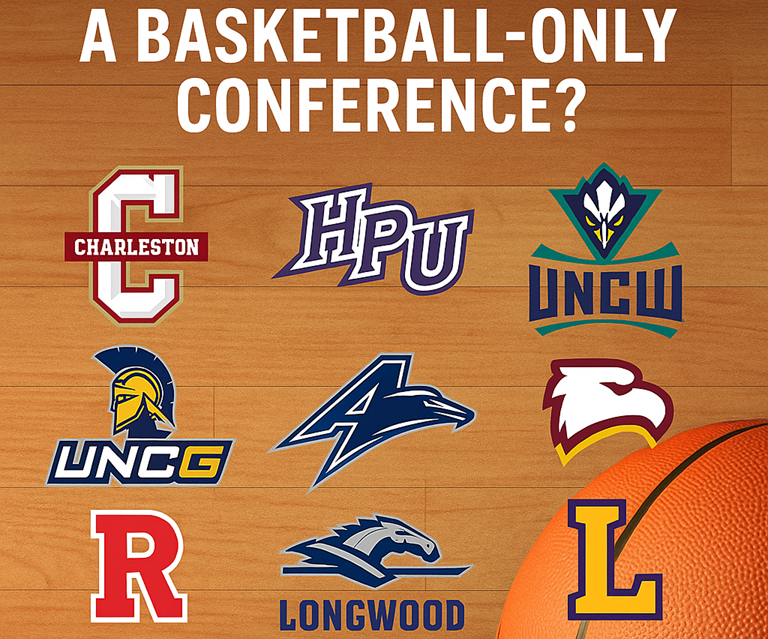
In the ever-evolving landscape of college athletics, football has long dominated the conversation—and the budgets. But what if a group of like-minded, basketball-first programs mostly in the Carolinas and Virginia decided to band together in a basketball-only conference, freeing themselves from the financial distractions of football in their current leagues and forging a new, focused path?
1
College of Charleston
2
High Point
3
UNCW
4
UNCG
5
UNC Asheville
6
Winthrop
7
Radford
8
Longwood
9
Lipscomb
Programs like College of Charleston, High Point, UNC Wilmington, UNC Greensboro, UNC Asheville, Winthrop, Radford, Longwood, and Lipscomb share a lot more than just geography. These schools, spread across North Carolina, South Carolina, Virginia, and Tennessee, are all basketball-centric and don’t field FBS or FCS football teams. This unique commonality could be the foundation for a transformative mid-major basketball conference, giving them a fighting chance to compete at a higher level than they currently do.
Other Potential Adds
Queens
Upstate
Drexel
Hofstra
Vermont
Iona
North Florida
FGCU
Bellarmine
Northeastern
Mount St Marys
Belmont (if the league got stonger)
Why Basketball-Only Makes Sense… Now
In the past, it made sense for basketball-only programs to associate with football schools for potential TV deal leverage. With football’s potential however is enormous expenses and demands, it often takes precedence in university athletics budgets, especially in the FBS and even in the FCS ranks. For these basketball-first schools, the absence of football means fewer competing priorities. However, that also means their current conferences don’t fully capitalize on their basketball potential in today’s revenue-sharing and NIL era, often placing hoops behind football’s needs even at schools basketball is the higher profile or winning sport.
A basketball-only league could enable these schools to direct more resources and revenue streams exclusively toward basketball. This kind of focused revenue sharing would allow them to invest more heavily in their rosters.
Lessons from the Big East
Given the current limits on revenue sharing, the Big East could theoretically invest more in basketball than even the SEC, where football dominates the budget with a $20.5 million per year limit. Leagues with football have to support those programs first, often taking up most of the budget. The wealthier Big East schools can divert a larger amount to basketball even if they have a lower overall limit if they choose. Even the less wealthy programs in the conference can devote as much or more resources to basketball under this setup as many currently understand it.
There is even speculation that a school like VCU in the Atlantic 10 might outspend some Power 5 programs in basketball given this favorable arrangement for basketball-only schools.
If these Southern mid-majors committed to a similar basketball-first model—either formally or through NIL if they aren’t opting in—they could elevate their collective profile and financial standing beyond what conferences many are in or compete with in the region for players like the Sun Belt, Southern, CAA, or MAC currently offer. The Sun Belt, while competitive, still prioritizes football, meaning basketball often takes a backseat. A school like College of Charleston or High Point, with sufficient financial backing, doesn’t have to worry about this and could potentially fund their basketball programs similarly to an American Athletic Conference level in theory where many of those schools will have to spend huge parts of there limits on football.
If a group of schools like this came together, reportedly with programs like Radford or High Point willing to invest, they could become far more competitive.
Regional Fit and Expansion Potential
Geographically, a conference comprising these NC/SC/VA/TN schools would have a natural regional identity with reduced travel costs and strong local rivalries—a major plus for fan engagement and budget control. Basketball is the primary sport at many of these schools, and proximity would help maintain high attendance and local media interest, building a solid foundation for the conference’s brand.
Moreover, this basketball-only model could expand beyond the Southeast. Adding a “Northeast wing” featuring basketball-focused programs without football like Drexel, Hofstra, Vermont, and Iona. If schools like Queens or USC Upstate don’t fit the vision competitively currently they might as the conference evolves. There are options to expand if it goes well. They also don’t have to worry about schools jumping like they did in the past for football like in the CAA and SoCon.
The Upside: A New Mid-Major Power in College Basketball
By coming together under a basketball-only banner, these schools could:
Maximize basketball revenue by aligning with like-minded institutions that want to support hoops above all else.
Allocate resources efficiently without the budget dilution caused by costly football programs in this paying athletes era.
Attract higher-quality recruits and coaches drawn by the promise of greater institutional basketball support without football distractions, or rising to take more of the pie.
Boost NCAA tournament at-large bid hopes and seedings thanks to a stronger conference profile and better overall investment in basketball.
Create regional rivalries and fan excitement around basketball-centric weekends and events.
While it’s a bold vision, it’s one grounded in the practical realities of college sports finances and regional identity. A basketball-only conference for Southern mid-majors could finally give these programs the focused platform they need to rise in college basketball’s increasingly competitive landscape. Many of them do or have shared conferences already. It seems only natural their could be some horse trading and rearranging into this model makes sense. Will it happen, probably not but it should.