Not too many years ago, Houston found itself in a challenging position, navigating through the tumultuous landscape of the second incarnation of Conference USA (CUSA). Sharing the stage with teams such as East Carolina, Rice, Tulane, and Central Florida—newly arrived from the ASun—the program, once a source of pride, was struggling. Notably absent were the powerhouses like Louisville, Cincinnati, and Marquette, which had moved on to the Big East. This marked one of the lowest points in Houston’s history, and there were concerns that it might follow the path of other former Final Four contenders and NCAA regulars, such as Western Kentucky, San Francisco, or New Mexico State, which had all been relegated to lesser roles in the world of college basketball.
During those years, despite being situated in one of the largest cities in America and boasting a student population of 40,000, Houston faced a disheartening reality. The program struggled to attract even a couple of thousand fans to their arena, which, unfortunately, was showing signs of wear and tear. The prospect of Houston fading into obscurity loomed large, reminiscent of other once-proud institutions that had faced similar challenges.
Gone were the glory days of Phi Slama Jama, and the program had descended into disarray, enduring a disheartening streak of missing 17 consecutive NCAA tournaments. In the 25 years since the era of Hakeem Olajuwon and Clyde Drexler playing under the guidance of Guy Lewis, Houston had only managed to secure a spot in the tournament thrice. Lewis, the architect behind their success, had led the team to an impressive five Final Fours, including a remarkable three consecutive appearances from 1982 to 1984. His coaching legacy concluded with his retirement in 1986.
Houston’s coaching woes were exacerbated by regrettable decisions, including the appointment of Clyde Drexler as head coach—an early experiment in hiring former players with no coaching experience. The outcomes were far from favorable, with Alvin Brooks managing only 23 wins in three seasons at Lamar after his stint with Houston, and Ray McCallum concluding his career with a record barely above .500. Clearly, these were not commendable coaching choices.
However, a pivotal moment in the coaching trajectory occurred with the hiring of collegiate Hall of Famer Tom Penders. In stark contrast to the questionable hires preceding him, Penders brought a wealth of experience and a proven track record. With coaching stints at six other colleges, including notable institutions like Texas, Rhode Island, George Washington, Fordham, and Columbia, Penders had already earned his stripes. His impressive resume included ten NCAA tournament appearances, with eight of them achieved during his tenure at Texas. During the mid-1990s, he secured three SWAC championships. Notably, Penders had guided Texas to the Elite 8 and a Sweet 16, while also leading Rhode Island to the Sweet 16. In the context of previous hires, Penders’ arrival marked a significant shift, as a seasoned and accomplished coach, even bordering on Hall of Fame credentials, took the reins in 2004.
Under the guidance of Tom Penders, respect was gradually restored to the Houston program. Penders had a proven track record of coaching teams that consistently performed at or near NIT quality every season. Considering the challenging circumstances and the considerable distance Houston had fallen, Penders’ efforts were commendable. Despite this, the fan base continued to show reluctance in attendance, and the arena remained untouched by renovations.
Despite the tangible improvements in the team’s performance, the challenge lay in transforming the perception among fans and addressing the overdue renovations needed for the arena. Penders’ dedication to elevating the program was evident, yet the disconnect between on-court success and fan engagement persisted, coupled with the pressing need for a revamped arena setting.
Memphis
During that period, it’s crucial to recognize that the second version of CUSA was essentially dominated by Memphis and what could be described as the “11 dwarfs.” An impressive 61-1 record in CUSA from 2006 to 2009, with their last loss in 2006, showcased Memphis’s unrivaled dominance. Adding to the challenge, conference tournaments were hosted on their home court, magnifying the difficulty for opposing teams. The conference, characterized by a lack of depth and often dubbed a mid-major, presented a formidable obstacle for teams aiming at an at-large bid. Teams found themselves in a precarious situation with RPI rankings ranging from 55 to 85, facing the daunting task of securing an auto bid by defeating a top 5 team on their home court.
This scenario created one of the most challenging landscapes, a sort of “no man’s land,” where the teams, despite being competitive, struggled to secure at-large bids. Their RPIs positioned them in a range that offered almost no chance at an autobid. These were teams that, under slightly different circumstances in a stronger conference, might have been regular contenders for the NIT but faced significant obstacles in making it to the NCAA tournament, especially during the 2006 season.
2010
In the 2009-10 season, the Houston team saw the return of their senior leaders, notably Aubrey Coleman, who showcased remarkable stats with an average of 25.6 points per game and 7.4 rebounds per game. The regular season unfolded with a record of 15-15 (7-9) and an RPI of 110. Notably, this marked the first season in which the tournament wasn’t held at the FedEx Forum in Memphis, and John Calipari had moved on to Kentucky.
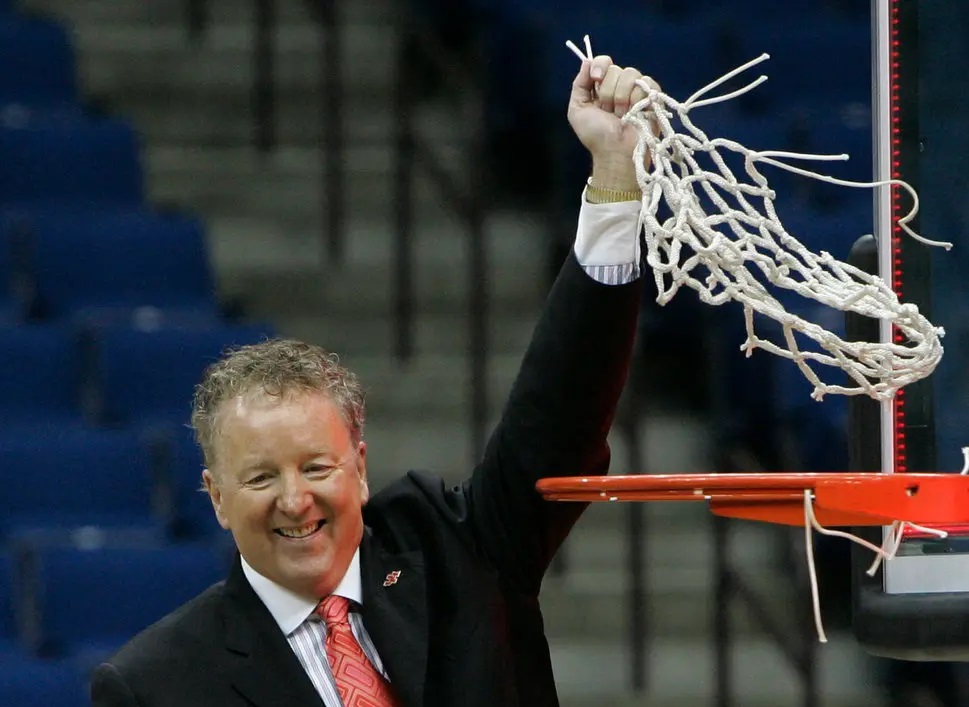
Under Tom Penders’ guidance, Houston defied expectations by securing four wins and earning a spot in the NCAA tournament as a 13th seed. Despite a commendable tournament run, the team faced a 12-point defeat against Maryland, leading to Penders’ subsequent dismissal.
The decision to part ways with Penders became a point of contention, especially considering the looming challenge of rebuilding after a somewhat disappointing season, punctuated by the tournament run. From the perspective of a fan who had witnessed Houston’s struggle to relevance, it seemed somewhat unjust to dismiss a proven head coach like Penders. Over his six years, he had not only revived the program but had also significantly improved their RPI ranking, moving from an average of 177 in the previous 11 years to an impressive average of 82nd. Furthermore, he led the team to their first NCAA appearance in 17 years. Given this overall history and Penders’ accomplishments, the decision appeared premature, and some believed he should have been granted at least another season to continue the positive trajectory he had initiated.
The Aftermath
More often than not, the proactive decision to dismiss a coach, especially when most other programs wouldn’t make such a move in a similar situation, doesn’t yield the desired results. Houston found itself in a unique position, perhaps one of the few schools ever to terminate a coach who had guided them to their first NCAA appearance in 17 years during the very season he achieved that milestone. In hindsight, it appeared to be a decision driven by factors beyond mere performance metrics, and predictably, the outcome did not favor the program. Some might even consider it a form of karma.
The successor, Dickey, arrived at Houston with a considerably less impressive resume than Penders and and hadn’t been a head coach for a decade. His previous stint at Texas Tech had concluded on a sour note, adding another layer of skepticism to the decision-making process. The move to replace Penders with Dickey underscored the challenges programs face when parting ways with the known and attempting to navigate uncharted territories with unproven alternatives.
Houston’s decision to fire Dickey and take the risk of hiring Kelvin Sampson, despite the recent show-cause penalty for recruiting violations at Indiana, marked a pivotal turning point in the program’s history. Sampson, against the backdrop of challenges, successfully transformed Houston into a national basketball powerhouse and orchestrated their return to one of the premier basketball conferences, alongside formidable teams like Kansas in the Big 12. The key first step in getting to that point seems to be when they decided they were tired of not going to the NCAA tournament and an autobid wasn’t cutting it.
While the initial choice to part ways with Penders might have seemed questionable, this moment represented a clear shift in Houston’s vision for their program. In the same year, they not only announced but committed to a renovation of their old arena, which, though it took seven years to materialize, demonstrated their determination to reshape the future. It was a bold move that reflected the program’s commitment to excellence, regardless of the scrutiny and criticism that might follow firing a coach that just had taken the program to the first NCAA in 17 years and revived it to respectability. They however had a vision beyond 2,000 fans in the stands and 13 seed Autobids clearly where most programs would have settled in.
The decision to hire Sampson, despite the controversy surrounding his past, showcased Houston’s refusal to be complacent with their current situation. The program was willing to invest in itself and set ambitious standards for success perhaps not inline with what the resources and support suggested. At a time when many others might have opted for stability and continuity with Penders, Houston chose a different path, one that has undeniably paid off. The investment, both in terms of coaching and infrastructure, has revitalized the program, attracting attention on the national stage and rekindling the spirit of winning a truly elite level that had faded in previous years.
Indeed, there are valuable lessons to be gleaned from Houston’s trajectory, and other programs in similar situations can draw inspiration from their strategic decisions. Following Houston’s lead, SMU embarked on a comparable path after a period of stagnation and settling. Much like Houston’s move after parting ways with Penders, SMU took decisive action by renovating their arena and making a high-profile coaching hire in Larry Brown.
The parallel continues as SMU, post-Penders era, demonstrated the importance of ambition and a commitment to excellence. Even when faced with the challenging decision to part ways with a coach who had led the team to the brink of NCAA tournament entry, SMU prioritized their long-term vision over short-term success.
The ambitious moves made by both Houston and SMU paid off handsomely. Houston’s resurgence and SMU’s push towards the ACC underscore the impact of strategic decisions, visionary leadership, and a commitment to achieving excellence. Programs navigating through challenging times can indeed draw valuable insights from these examples, emphasizing that aiming higher, renovating facilities, and making bold coaching choices can be key ingredients in revitalizing a floundering program.