Like with every thing in life, timing seems to be everything. In the sport of boxing fighters seems to not have self awareness or know when to step away, or in many case continue to fight because they need the money. For any other sport that’s not a big deal they just get benched or cut, but for boxing it usually ends badly with fighter taking unnecessary punishment, getting knocked out, and tarnishing their outstanding legacy’s. Many fighters careers would be viewed much, much more favorably if they had stopped sooner. It’s probalby a pride driven thing with lots of ego involved for any athlete, but especially in combat sports.
Roy Jones Jr
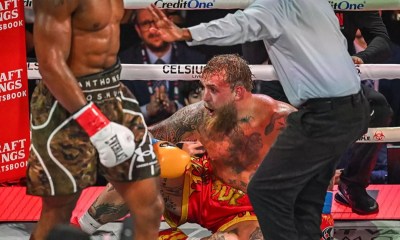
Roy Jones Jr.’s career trajectory stands as a cautionary tale of how a final chapter can overshadow an illustrious legacy. Undoubtedly one of the greatest pound-for-pound fighters in history, Jones ended his career with a record of 66-10, culminating in a recent loss at the age of 54 to debutant Anthony Pettis.
Jones’s descent from greatness began after he achieved a remarkable feat by becoming the only boxer in history to start his professional career at light middleweight and subsequently win a heavyweight title by defeating Jon Ruiz. Had he retired after that historic victory, he would likely have been remembered as one of the greatest fighters ever, if not the greatest. At that juncture, aged 34, he boasted a stellar record of 48-1, with the sole loss attributed to a disqualification for hitting a boxer taking a knee—a defeat he later avenged.
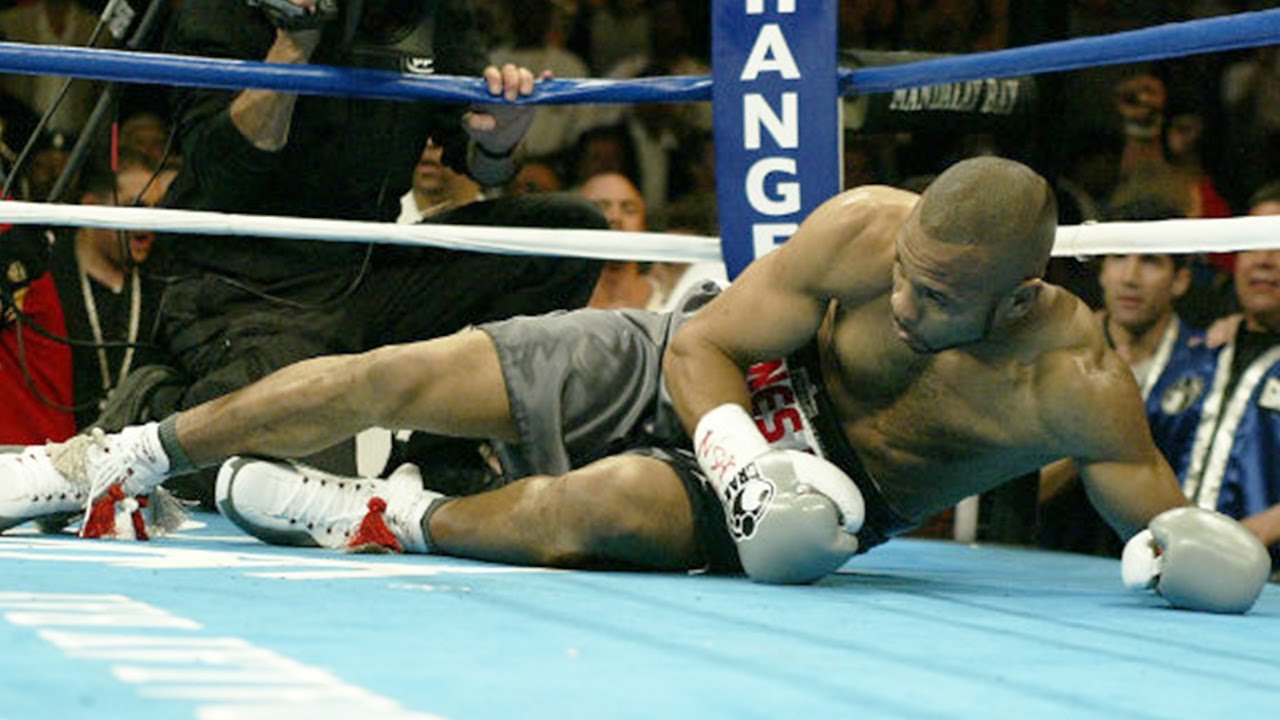
However, Jones’s decision to continue fighting led to a decline marked by losses to Antonio Tarver and journeyman Glen Johnson. His once-dominant style, characterized by low hands and evasive maneuvers, began to reveal vulnerabilities as age caught up with him. The diminished speed rendered his defensive tactics ineffective, exposing him to punches he could no longer evade with the same agility. This decline tarnished the latter part of his career, overshadowing the brilliance that characterized his prime years. If he had walked away at 49-1 having dominated the division, including stepping up to win the heavyweight title how differently would he be viewed today as an all time great. Instead we have the last images of him knocked out like this by Glen Johnson.

Mike Tyson
When Mike Tyson went to prison, he was 41-1, with the only loss to a highly motivated and emotionally charged, best-shape-of-his-life Buster Douglas, shortly after his mother had passed. It was one of the biggest upsets in history, but reasonably explainable as Tyson overlooking him and Douglas fighting the fight of his life. If Tyson had gone to prison, found religion, and decided to call it a career right there, his legacy might have challenged even Muhammad Ali’s.
Tyson would have had all his great moments and brutal knockouts, maintaining his reputation as an all-time great. After prison, he added very little positive to his legacy, despite winning the title again, only negative outcomes were to come, losing to peers Evander Holyfield and Lennox Lewis, as well as some really bad losses to journeymen at the very end. Had he retired with his last fight at the age of 24, having been the youngest heavyweight champion ever, beating Larry Holmes, Michael Spinks, and savagely knocking out so many, it would have always been a “what if” scenario, but one where you couldn’t disprove he was potentially the best ever because you wouldn’t know. You would have to assume he just retired far to early and judge him based on his 41-1 record.
You only knew how great he was at his peak which was always destined to peak early given his lack of length. He needed that speed to close the distance and get on the inside, and athletes are at their greatest and most explosive before the age of 25. There was almost little he could do to add to his legacy after 25, with declining speed and of course lack of focus and destructive behavior. It’s even reasonable to believe Tyson could have walked away from the sport after prison, it was an event of demarcation.
Evander Holyfield
Holyfield is one of the great fighters who hung around far, far too long. This despite often talking about retiring, but then you look up and the guy is still fighting at the age of 48. Granted, it wasn’t all bad, as he won the heavyweight title for a fourth time at the age of 39. However, he was a smaller, manufactured so to speak heavyweight who should have gotten out much, much earlier. Simply for the damage aspect fighting much larger fighters at more natural weights. His legacy is intact, but had he retired at the age of 36 after the draw with Lennox Lewis when his record was 36-3-1, he very well could have laid claim to a top 2 or 3 heavyweight of all time. After all, he would have had that draw with Lewis and wins over Tyson (twice), Bowe, Holmes, and Foreman albeit the last two well past their prime. Foreman was capable however and would win the heavyweight championship after that loss. That’s an incredible resume with the only other losses coming to Riddick Bowe (twice) and Michael Moorer at the time. His legend and resume would have been all-time, but as it is, he added a bunch of late-career losses, including to Lewis, that tarnishes it, finishing 44-10. The 8-7 at the end of the career took the shine off.
Muhammad Ali
This one is difficult because we don’t know just how soon Muhammad Ali was showing his physical decline from Parkinson’s. It was clear in the Larry Holmes documentary that he was slow and often slurring his speech. Although widely considered the greatest fighter of all time, fighting in the greatest era of all time, he also wasn’t immune from knowing when to walk away. If Ali had retired after the Ernie Shavers fight at the age of 35, he would have been 55-2, with the only losses to Joe Frazier and Ken Norton, both of which he avenged. That would look much better than the 1-3 he closed his career with, losing to Leon Spinks, Larry Holmes, and Trevor Berbick. Two of which weren’t very respectable losses if you didn’t understand the likely sickness Ali was potently dealing with. That’s perhaps the biggest reason people give him a pass and can write it off as the early stages. Still, if they weren’t there and he was 55-2, his legacy looks even that much greater and there is no reason to have to explains.
Conclusion
| Roy Jones Jr | 49-1 |
| Mike Tyson | 41-1 |
| Evander Holyfield | 36-3-1 |
| Muhammad Ali | 55-2 |
Much in the way Rocky Marciano gets a clear legacy boost by knowing when to get out, retiring at the age of 32, these fighters would have probably benefited the most legacy-wise by doing the same. Marciano, had he stuck around with Ali coming on the scene and fought at 38 years old like Joe Louis did when Marciano defeated him, would have lost some more as well and tarnished his legacy.
I think each fighter, although still considered all-time greats, would have had a legacy boost had they walked away sooner. It’s a strange dynamic because take George Foreman, who did walk away at the age of 27. I think he actually benefited from coming back and fighting in his 40s and becoming the oldest champion at the time ever. That actually added to his legacy more than if he had fought on into his early 30s and just retired. Timing is everything.



College Basketball
The ADJeff 7.0 Club: Statistical Eliteness as Boozer Joins Just 20 Members


College Basketball
Doug Gottlieb, KenPom, and the Cost of Fighting the Math

College Basketball
NCAA College Basketball (CBB) Top 25 Power Rankings

College Basketball
2025–26 Mid-Major College Basketball Rankings: Top 25 Non-P5 Teams


College Football
QB Transfer Portal Rankings 2026: Adjusted for Strength of Schedule

College Basketball
2026 College Basketball Mock Coaching Carousel 2.0: Updated Predictions


College Basketball
Summer Clearance: Bargain Bin Shopping in the Portal


College Basketball
The Top 300 Returning Players

College Basketball
Top 200 transfers by Adjusted Efficiency