Edit: This article is our preseason list. The most current in season Player Ratings are linked here.
This is our first look at the top 100 returning players for the 2025-26 college basketball season, based exclusively on performance metrics and our Adjusted Efficiency model (ADJeff), which factors in strength of schedule (SOS).
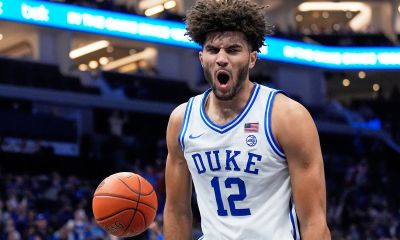
Note: this list includes returning college I players and is strictly based on last years numbers and our model. Freshmen prospects like Cameron Boozer (Duke) and A.J. Dybantsa (BYU)—are projected expected ADJeff ratings.
Rated 6.7 in our Adjusted Efficiency model, Toppin takes the top spot heading into 2024–25. He averaged 18.2 points, 9.4 rebounds, and 1.2 assists over 33 games last season, with a dominant 32.1 PER. A versatile force in the frontcourt, Toppin’s production and efficiency set the standard for returning players. He was very good on defense as well with a 95 defensive rating. The 4 million dollar man. If anyone in college basketball is worth that money it’s Toppin with the impact he makes on the court.
With a 6.3 rating in our Adjusted Efficiency model, Kaufman-Renn ranks second among returning players. He put up 20.1 points, 6.5 rebounds, and 2.2 assists over 36 games last season, posting a strong 27.0 PER. A skilled interior scorer with surprising range, he took a major leap and proved he can carry a bigger offensive load. A small weakness is the defensive rating isn’t great, which sank him a little in our model. The good far still outweighs the bad.
Smith earns a 5.6 rating in our Adjusted Efficiency model, placing him third overall. In 36 games last season, he averaged 15.8 points, 8.7 assists, and 4.5 rebounds with a 21.6 PER. One of the nation’s top playmakers, Smith ran the show for Purdue with elite vision and improved scoring touch from deep. Just and outstanding pairing with Trey Kaufman-Renn
With a 5.6 Adjusted Efficiency rating, Ike slots in at number four. He averaged 17.3 points, 7.3 rebounds, and 1.4 assists over 35 games last season, posting a dominant 32.1 PER. He’s putting those counting stats up in only 23 minutes a game too. His offensive rating of 128.9 paired with a strong 95.9 defensive rating highlights his two-way impact. A force in the paint with soft hands and improved efficiency, Ike anchored Gonzaga’s frontcourt all year.
Oweh comes in at number five with a 5.6 Adjusted Efficiency rating. In 36 games last season, he averaged 16.2 points, 4.7 rebounds, and 1.7 assists with a 22.0 PER. A tough, downhill guard with a physical edge and improving jumper, Oweh brings two-way value and relentless energy to Kentucky’s backcourt.
Thornton earns a 5.5 rating in our Adjusted Efficiency model, placing him sixth overall. He averaged 17.7 points, 4.6 assists, and 3.4 rebounds across 32 games, finishing with a 22.5 PER. A steady hand at the point with elite shooting splits and a polished floor game, Thornton was one of the most efficient guards in the Big Ten last season.
Saunders checks in at number seven with a 5.4 Adjusted Efficiency rating. Over 35 games last season, he posted 16.5 points, 4.5 rebounds, and 1.6 assists per game with a 24.2 PER. 131 offensive rating. A sharpshooter with high-level efficiency, Saunders knocked down over 43% from three and brought consistent energy on both ends for BYU.
#8 – Alex Condon, 6’11” Forward, Florida Condon lands at number eight with a 5.4 Adjusted Efficiency rating. In 37 games last season, he averaged 10.6 points, 7.5 rebounds, and 2.2 assists, finishing with a 22.8 PER. A versatile big with skill and feel, Condon brought mobility, rebounding, and underrated playmaking to Florida’s likely returning national championship frontcourt.
#9 – Chad Baker-Mazara, 6’7″ Guard/Forward, USC Baker-Mazara ranks ninth with a 5.3 Adjusted Efficiency rating. Last season, he averaged 12.3 points, 3.0 rebounds, and 2.7 assists over 38 games At Auburn, posting a 20.6 PER. Known for his scoring and ability to stretch the floor, he shot nearly 39% from three and 88.8% from the free-throw line. He is a heck of a defensive player as well. The only real issue is between the ears and fouls and such that cost you. Clearly the biggest shoe left in the portal that for sure can return. He’s 26 years old and essentially in the prime of his career.
Tugler ranks 10th on the list with a 5.3 Adjusted Efficiency rating. Over the course of 40 games last season, he averaged 5.5 points, 5.9 rebounds, 0.9 assists, 1.9 blocks, and 1.0 steals, finishing with a 20.2 PER. A strong presence on the boards, Tugler’s efficiency in the paint and rebounding made him a valuable asset for Houston. While his stats may not stand out, he is likely the best defender in the nation, with the top defensive rating at 87.0, as well as the #1 defensive box plus-minus, powered by the 6th-highest block rate in the country last year. With Roberts graduating, Tugler is expected to take on a larger role next season for Houston.
#11 – Thomas Haugh, 6’9″ Forward, Florida Haugh ranks 11th with a 5.3 Adjusted Efficiency rating. In 40 games last season, he averaged 9.8 points, 6.1 rebounds, and 2.2 assists with a 22.0 PER. A skilled forward with solid rebounding and efficient scoring, Haugh was a key contributor to Florida’s frontcourt, providing both versatility and steady production.
Jefferson comes in at number 12 with a 5.3 Adjusted Efficiency rating. In 35 games last season, he averaged 13.0 points, 7.4 rebounds, and 3.1 assists, finishing with a 23.3 PER. While not elite in shooting percentages, Jefferson’s overall efficiency and versatility make him a key contributor for Iowa State, but the real value is the defense. He was 3rd in the nation 2 years ago at Saint Mary’s and 11th last year with a 92 defensive rating.
Ivisic comes in at number 13 with a 5.3 Adjusted Efficiency rating. In 32 games last season, he posted 13.0 points, 7.7 rebounds, and 2.3 assists, with a 22.0 PER. A skilled big man with a soft touch around the basket and from distance, Ivisic was a force for Illinois, offering both scoring and rebounding prowess in the paint. Playing with his brother next year will be fun and motivating I suspect. If they can play some together there should be solid chemistry.
Reed Jr. ranks 14th with a 5.2 Adjusted Efficiency rating. Over 35 games last season, he averaged 9.6 points, 7.3 rebounds, and 1.0 assist with a stellar 30.1 PER. Known for his efficiency around the basket, Reed Jr. shot an impressive 67% from the field and made a strong impact in rebounding and defense for Connecticut. He had an outstandig year and should be inline for more minutes with Sampson Johnson moving on. He should have played more last year as well as awesome as he played.
#15 – KeShawn Murphy, 6’10” Forward, Auburn Murphy comes in at number 15 with a 5.2 Adjusted Efficiency rating. Last season, he averaged 11.7 points, 7.4 rebounds, and 1.6 assists over 34 games, finishing with a 24.6 PER . A physical presence in the paint, Murphy excelled at finishing around the basket and providing strong rebounding for Auburn, though his outside shooting still has room for improvement. He had the 2nd best defensive rating on Mississippi State and behind Matthews one of the best defenders in the nation. Bruce Pearl has a good track record and this is his Broome replacement so there is that as well. 25 PER vs a top 20 Strength of Schedule
#16 – Emanuel Sharp, 6’3″ Guard, Houston Sharp ranks 16th with a 5.1 Adjusted Efficiency rating. Over 37 games last season, he averaged 12.6 points, 3.0 rebounds, and 0.8 assists, with a 20.0 PER. A sharpshooter from beyond the arc, Sharp converted 40.7% of his three-point attempts, and his efficiency from the free-throw line (86.8%) helped solidify his role as a key scorer for Houston. Sharp will try to make it a a redemption tour after turning it over in the championship game.
Ejiofor ranks 17th with a 5.1 Adjusted Efficiency rating. In 36 games last season, he posted 14.7 points, 8.1 rebounds, and 1.6 assists with a 24.6 PER. A versatile big man, Ejiofor was effective in both scoring and rebounding for St. John’s, showcasing excellent efficiency (57.7% FG) and contributing defensively despite a limited three-point range.
#18 – Devin McGlockton, 6’7″ Forward, Vanderbilt McGlockton ranks 18th with a 5.1 Adjusted Efficiency rating. Over 33 games last season, he averaged 10.3 points, 7.9 rebounds, and 1.0 assist with a 23.4 PER. A reliable scorer and rebounder, McGlockton shot an impressive 56.8% from the field and 33.8% from three, while also contributing defensively for Vanderbilt.
Royal ranks 19th with a 5.0 Adjusted Efficiency rating. In 31 games last season, he averaged 13.7 points, 6.9 rebounds, and 1.1 assists with a 20.8 PER. Royal shot 52.5% from the field and 27.6% from three, contributing significantly to Ohio State’s offense and rebounding efforts.
Williams comes in at 20th with a 4.9 Adjusted Efficiency rating. Last season, he played 34 games, averaging 15.1 points, 5.5 rebounds, and 3.6 assists with a 21.6 PER. He shot 43.9% from the field, 34.0% from beyond the arc, and 83.6% from the free-throw line, contributing across multiple facets of the game. He’s undecided as of now in the portal.
Payne ranks 21st with a 4.9 Adjusted Efficiency rating. In 34 games last season, he averaged 10.4 points, 5.1 rebounds, at Texas A&M with a strong 25.1 PER. He shot an impressive 64.6% from the field, although his free-throw shooting was a bit of a concern at 58.2%. His eFG% matched his field goal percentage, reflecting his efficiency. His per-minute numbers are dominant, showcasing a level of efficiency and impact that ranking systems continue to overlook. Payne’s ability to thrive in tough matchups underscores the flaws in traditional evaluations that ignore advanced metrics. Unfortunately, with a likely move to Buzz Williams’ system, his minutes may remain limited — but in the right role with 30+ minutes a night, he could be one of the most impactful transfers in the country. Maybe he will play more this season under Buzz.
Hubbard ranks 22nd with a 4.7 Adjusted Efficiency rating. He played 34 games last season, averaging 18.9 points, 2.1 rebounds, and 3.1 assists. Hubbard shot 40.2% from the field and 34.5% from beyond the arc. His free-throw shooting was excellent at 87.8%. With a solid 19.7 PER, vs a top 20 strength of schedule. he proved to be an efficient player despite modest shooting percentages. He is very small and the defense 113 defensive rating keeps him down some. You need a good defense and bigs behind him certainly.
Edwards ranks 23rd with a 4.7 Adjusted Efficiency rating. Last season, he appeared in 33 games, averaging 17.0 points, 2.0 rebounds, and 1.3 assists at Vanderbilt. Edwards shot 43.5% from the field and 35.3% from three. His free-throw shooting was strong at 83.1%, and he posted a 21.5 PER, demonstrating his solid efficiency on the court. Edwards was a scoring machine last season for Vandy. The issue? Only 25 minutes per game, with 9 of those games off the bench. There’s surely a coach out there ready to give him 35 minutes and get their money’s worth. A classic case of mismanaging a high-volume scorer. Averaging 27 points per 40 minutes on .58 percent true shooting for an SEC team is pretty nuts. He can score with just about anyone in the nation and scoring is how you win games. At the end of the day scoring efficiently is the most important stat and he does it in bunches.
This will likely be one of the most controversial inclusions but he is the player in Wisconsin driving the value with a 136 offensive rating, elite nationally and 102 defensive best on the team. Winter enters the season with a 4.7 rating. Over 37 games last season, he averaged 9.4 points, 5.8 rebounds, and 1.1 assists. His shooting efficiency is impressive with a 56.4% field goal percentage and 35.8% from beyond the arc. He also posted a solid 76.9% from the free-throw line. His effective field goal percentage (eFG%) stands at 64.0%, with a PER of 23.1, highlighting his all-around effectiveness on the court on both sides of the ball.
With a 4.6 rating in our Adjusted Efficiency model, Gillespie is ranked 26th. Last season, he averaged 14.7 points, 4.8 assists, and 2.8 rebounds over 36 games, posting a solid 21.1 PER at Maryland. A reliable shooter, Gillespie connected on 40.7% of his three-pointers and is known for his efficiency and consistency on both ends of the floor.
Keita earns a 4.6 rating in our Adjusted Efficiency model, ranking 28th. Last season, he averaged 7.4 points, 7.9 rebounds, and 0.7 assists over 35 games, with a 23.4 PER. Known for his efficiency around the basket, Keita shot an impressive 67.3% from the field and made a strong impact as a rebounder and rim protector. 130 offensive rating and 99 defensive rating, and likely has a larger role without Fousseyni Traore
#29 – Owen Freeman, 6’10” Forward, Creighton Freeman boasts a 4.6 rating in our Adjusted Efficiency model, ranking 29th. Over 19 games last season, he averaged 16.7 points, 6.7 rebounds, and 1.3 assists, with a 27.6 PER. A highly efficient scorer, Freeman shot 63.8% from the field and made his presence felt on both ends with strong rebounding and finishing ability.He’s an elite shot-blocker and defensive presence, though Iowa’s system didn’t maximize that. At Creighton, he fits perfectly into their drop coverage system, just like Kalkbrenner did. With more structure around him, he’s poised to show his full potential on both ends. Having his Point guard Dix from iowa coming with him to Creighton should make the transition seamless on offense as well.
Dailey checks in at #30 with a 4.6 rating in our Adjusted Efficiency model. In 33 games last season, he averaged 11.4 points, 4.0 rebounds, and 1.4 assists, with a 21.1 PER. A smooth forward with shooting touch, Dailey connected on 37.8% from three and contributed solid offensive efficiency in a complementary role.
Martinelli checks in at #31 with a 4.5 Adjusted Efficiency rating. He broke out in 2024-25, averaging 20.5 points, 6.2 rebounds, and 1.7 assists across 33 games. His 19.6 PER reflects a high-usage scorer who elevated his game dramatically, giving Northwestern a reliable offensive weapon on the wing. I was told he seemed low but the net rating holds him back some with only a 112 offensive rating vs a 108 defensive rating.
#32 – Tyler Bilodeau, 6’9″ Forward, UCLA Another bruin next up Bilodeau earns a 4.5 rating in our Adjusted Efficiency model, ranking 32nd. Last season, he averaged 13.5 points, 4.6 rebounds, and 1.5 assists over 33 games, with a 20.7 PER. Stretching the floor with 40% shooting from three, Bilodeau brings versatility and efficiency to UCLA’s frontcourt. After Cronin called him out publicly in January I’m a little surprised he didn’t portal out of UCLA.
Reneau comes in at #33 with a 4.5 rating in our Adjusted Efficiency model. In 26 games last season, he posted 13.3 points, 5.5 rebounds, and 2.0 assists per game, at Indiana with a strong 24.4 PER. A physical presence inside, Reneau was highly efficient around the rim, shooting 55.2% from the field while expanding his playmaking touch.
Mitchell lands at #34 with a 4.5 Adjusted Efficiency rating. In 33 games last season, he averaged 13.9 points, 4.7 rebounds, and 1.9 assists, posting a 21.2 PER. A versatile forward with strong two-way upside, Mitchell brings physicality and consistency, shooting over 50% from the field in his new role at Missouri. This is a move that seemed to benefit both Mithell and Duke last year for the better.
#35 – Henri Veesaar, 6’7 Forward, UNC – 4.5 Adjusted Efficiency rating Ready for a bigger role at UNC.
#36 – Tobe Awaka, 6’8″ Forward, Arizona – 4.5 Adjusted Efficiency rating Awaka split time with Veesaar last year but won’t have to now and should shine.
#37 – Tahaad Pettiford, 6’1 Guard, Auburn – 4.5 Adjusted Efficiency rating Could stay in the NBA Draft.
#38 – Morez Johnson, 6’9″ Forward, Michigan – 4.5 Adjusted Efficiency rating Playing in a stacked post again with Yaxel and Mara.
#39 – Milos Uzan, 6-4″ Guard, Houston – 4.4 Adjusted Efficiency rating A very good player, but not driving the value that Tugler or Sharpe did.
#40 – Malik Dia, 6’9″ Forward, Mississippi – 4.4 Adjusted Efficiency rating This might be a surprise, but the numbers are the numbers. Dia was very valuable on both ends for a very good Ole Miss team.
#41 – Dain Dainja, 6’9″ Forward, Memphis – 4.3 Adjusted Efficiency rating Dainja finally showed what he can do per possession in a featured role. He was wrecking the Big Ten in limited minutes, so why would anyone be shocked he’d do it in a starter role at Memphis? Memphis also played an elite out-of-conference schedule.
#42 – Flory Bidunga, 6’9″ Forward, Kansas – 4.3 Adjusted Efficiency rating Can be one of the best defensive bigs in the nation with a 92 defensive rating. Also posted a 23 PER and 125 offensive rating.
#43 – Josh Ojianwuna, 6’10” Forward, Baylor – 4.3 Adjusted Efficiency rating Baylor really missed him down the stretch and in the tournament. He posted a 21 PER against a top-5 schedule, along with an insane 143 offensive rating.
#44 – Fletcher Loyer, 6’4″ Guard, Purdue – 4.3 Adjusted Efficiency rating Perhaps a controversial pick, but Loyer is an elite shooter with a 17 PER and 44% from three. His biggest knock is his 113 defensive rating, but he compensates with a 127 offensive rating and a .630 true shooting percentage as a guard. He’s a valuable space provider for Smith and Kaufman-Renaud.
#45 – PJ Haggerty, 6’3″ Guard – 4.2 Adjusted Efficiency rating A usage monster, but in my opinion, a little overrated nationally.
#46 – Donovan Dent, 6’2″ Guard, UCLA – 4.2 Adjusted Efficiency rating A 20-point-per-game scorer on a top-40 team, with a 23 PER for New Mexico.
#47 – Jaxon Kohler, 6’9″ Forward, Michigan State – 4.2 Adjusted Efficiency rating Kohler drove a lot of Michigan State’s value, even if it isn’t immediately obvious.
#48 – Aden Holloway, 6’1″ Guard, Alabama – 4.2 Adjusted Efficiency rating Only averaged 11 points per game, but posted a 17 PER against one of the toughest schedules ever played.
#49 – Keyshawn Hall, Six-foot-seven Forward, Auburn – 4.2 Adjusted Efficiency rating A 19-point-per-game scorer in the Big 12, though his defense is a question mark.
#50 – Malique Ewin, 6’10” Forward, Arkansas – 4.2 Adjusted Efficiency rating Was #1 in my JUCO rankings before Florida State and didn’t do anything to change that. He was very productive in his one season in the ACC and will be a key part of Arkansas’s talented frontcourt this year, making his 4th stop.
#51 – Ernest Udeh, Forward, Miami – 4.2 Adjusted Efficiency rating Udeh anchored TCU’s defense with a 97 defensive rating, ranking 34th nationally. He’s doing it mostly by himself, with a 64% true shooting percentage. He was a former top-30 high school recruit, that doesn’t matter to the rankings, but it might to some. His fit with Malik Reneau at Miami could be challenging, but the interior talent is certainly there.
#52 – Yaxel Lendeborg, Forward, Michigan – 4.1 Adjusted Efficiency rating This one might be controversial, but the numbers don’t lie. He was awesome, but he also played against a weak 140 SOS, and UAB was barely a top-100 team both years. That said, Michigan should be a great fit for him, alongside other talented bigs. He’ll play the facilitating role in a two-big lineup, much like Danny Wolf did last year.
#53 – John Blackwell, Guard, Wisconsin – 4.1 Adjusted Efficiency rating Essentially matched AJ Storr‘s stat line in Gard’s offensive system.
#54 – Felix Okpara, Forward, Tennessee – 4.1 Adjusted Efficiency rating Tennessee’s defense was a little worse than normal, but Okpara is still a valuable rim defender. His numbers might be impacted by what was ahead of him in the lineup, but he remains a key piece.
#55 – Ven-Allen Lubin, Forward, UNC – 4.1 Adjusted Efficiency rating Lubin has been great individually since transferring from Vanderbilt two years ago in a 28-minute-per-game role. Last year, he really thrived once he played more. I’m surprised he returned, but with Veesaar’s stretch ability and height, Lubin could play more at power forward and roll to the rim. He’s a per-minute beast, and his defense was tied for the best on the team with Washington.
#56 – Jayden Quaintance, Forward, Kentucky – 4.0 Adjusted Efficiency rating Quaintance tore his ACL, so it’s uncertain how much he’ll play next year. However, if he can get back to full health, he’s an elite “Stocks” player (steals + blocks).
#57 – Tamin Lipsey, Guard, Iowa State – 4.0 Adjusted Efficiency rating Lipsey had a bit of a down year last season, particularly on defense, but he led one of the nation’s top defenses as a guard in previous seasons. I expect him to bounce back this season.
#58 – Seth Trimble, Guard, UNC – 4.0 Adjusted Efficiency rating Trimble struggled with his three-point shooting last year but plays much bigger than his size. He was UNC’s best defending wing and an elite guard rebounder, also getting to the line and hitting free throws. If he can improve his three-point shooting (which is a big “if”), he can take his game to the next level.
#59 – Mason Falslev, Guard, Utah State – 3.9 Adjusted Efficiency rating One of the top mid-major guards in the country. His numbers speak for themselves, and he’s a key piece for Utah State.
#60 – Alex Karaban, Forward, UConn – 3.9 Adjusted Efficiency rating Karaban had a solid year but not a standout one. He has the potential to make more money by staying at UConn, as he could be an integral part of their system moving forward.
#61 – Miles Byrd, Guard, SDSU – 3.9 Adjusted Efficiency rating A versatile wing who can do a bit of everything for SDSU. He’s important to their overall value but may need to develop more for higher-tier programs.
#62 – Chase Ross, Guard, Marquette – 3.9 Adjusted Efficiency rating Ross has a lot of potential but hasn’t fully realized it yet. He’s a solid contributor for Marquette and could take a step forward if he improves his consistency.
#63 – Jaden Bradley, Guard, Arizona – 3.9 Adjusted Efficiency rating Bradley has been good, though not outstanding. Still, he’s in a high-level program and can take on a larger role this year.
#64 – Silas Demary, Guard, UConn – 3.9 Adjusted Efficiency rating Demary is a solid player at UConn, offering value on both ends of the floor, but hasn’t yet reached an elite level.
#65 – Dailyn Swain, Forward, Texas – 3.9 Adjusted Efficiency rating Swain doesn’t shoot threes but has a strong 62% true shooting percentage. His value comes from hustle stats and doing the dirty work for Texas.
#66 – Tre White, Forward, Kansas – 3.9 Adjusted Efficiency rating Now that White is on a more successful team, he’s thriving. His True Shooting percentage jumped to 62% against a tough defensive schedule, signaling real growth and increased value.
#67 – Dishon Jackson, Forward, Pitt – 3.9 Adjusted Efficiency rating Jackson needs more minutes to showcase his full potential. He was a key defensive anchor at Iowa State and has shown he can handle starter minutes at Washington State and Charlotte.
#68 – Mouhamed Dioubate, Forward, Kentucky – 3.9 Adjusted Efficiency rating A versatile forward who could be more impactful with a more defined role at Kentucky.
#69 – Kylan Boswell, Guard, Illinois – 3.9 Adjusted Efficiency rating Boswell struggled with his three-point shooting last year, but he put up solid stats against a great schedule. He’s a good player who could improve if he works on his shooting consistency.
#70 – KJ Lewis, Georgetown – 3.9 Adjusted Efficiency rating Lewis is a hard player to gauge. He doesn’t shoot well but contributes in other areas, especially when facing elite competition. His game is a bit of a rollercoaster but can have high highs.
#71 – Nick Davidson, Forward, Clemson – 3.8 Adjusted Efficiency rating Davidson is a capable forward at Clemson but may not have the upside some others on this list do.
#72 – Markus Burton, Guard, Notre Dame – 3.8 Adjusted Efficiency rating Burton is a volume scorer, but his size may limit his defensive impact. A 109 offensive rating is concerning—while he can score 20 points every night, it raises the question of whether he’s truly making his teammates better or simply relying on scoring.
#73 – Solomon Ball, Guard, UConn – 3.8 Adjusted Efficiency rating Ball has a solid foundation but hasn’t fully broken out yet. Playing at UConn provides an opportunity to improve under a well-structured program.
#74 – Dillon Mitchell, Forward, St. John’s – 3.8 Adjusted Efficiency rating Mitchell is a top-tier athlete, but his skill development is still a work in progress. If he can refine his game, he could make a bigger impact in the future.
#75 – Toibu Lawal, Forward, Virginia Tech – 3.8 Adjusted Efficiency rating Lawal is a versatile forward who contributes across multiple areas, but hasn’t shown a consistent impact at a high level yet.
#76 – Paulius Murauskas, Forward, Saint Mary’s – 3.8 Adjusted Efficiency rating Murauskas is a solid player but hasn’t proven himself as a game-changer yet. Still, he offers good value for Saint Mary’s and could grow into a larger role.
#77 – Bennett Stirtz, Guard, Iowa – 3.7 Adjusted Efficiency rating Stirtz ranking might catch some heat for his ranking, but his numbers aren’t as impressive as expected, especially when considering his schedule, ranked around 110th. Playing 39+ minutes per game is impressive, but that inflates his stats even as slow as they play. It’ll be interesting to see how his game translates to the Big Ten.
#78 – Josh Dix, Guard, Creighton – 3.7 Adjusted Efficiency rating Dix has a lot of potential, and moving to Omaha alongside his pick-and-roll partner Owen Freeman will help him develop further.
#79 – Ryan Conwell, Guard, Louisville – 3.7 Adjusted Efficiency rating Conwell is a solid guard but hasn’t stood out in a major way. Louisville’s program could help him grow in a bigger role.
#80 – Ian Martinez, Guard – 3.7 Adjusted Efficiency rating Martinez offers decent value but hasn’t demonstrated elite-level production or a standout skill set.
#81 – Robert Wright, Guard, BYU – 3.7 Adjusted Efficiency rating Wright has some good moments but hasn’t fully proven himself at the highest level yet.
#82 – Rueben Chinyelu, Forward, Florida – 3.7 Adjusted Efficiency rating Chinyelu is an intriguing prospect, primarily as a defender and rim protector, but lacks the all-around game to be a major factor offensively.
#83 – James Scott, Forward – 3.7 Adjusted Efficiency rating Scott has shown flashes but needs more consistency to become a major player.
#84 – Tyler Harris, Guard – 3.7 Adjusted Efficiency rating Harris is solid but hasn’t been able to take his game to the next level. He’ll need to develop further to make a bigger impact.
#85 – Mackenzie Mgbako, Forward, Texas A&M – 3.7 Adjusted Efficiency rating Mgbako is a player with potential, but like many on this list, he has to prove it consistently. Texas A&M could provide the stage to do that.
#86 – Jackson Shelstad, Guard, Oregon – 3.7 Adjusted Efficiency rating Shelstad is expected to rank highly in some other rankings, but he had the worst defensive rating on Oregon’s team, which holds him back. His 15.8 PER is low, and while Oregon did face an elite schedule, his defensive concerns are a major issue in this model.
#87 – Braden Huff, Forward, Gonzaga – 3.7 Adjusted Efficiency rating Huff is an interesting prospect at Gonzaga, but still needs to prove himself at a high level before he can be considered a major factor.
#88 – Oscar Cluff, Forward, Purdue – 3.6 Adjusted Efficiency rating Cluff led the nation in PER at 35.1, but it came against a weaker schedule (around 170th). His time at Washington State showed he could perform on an NCAA team, but consistency at a high level remains a question.
#89 – Malik Thomas, Guard – 3.6 Adjusted Efficiency rating Thomas is currently uncommitted, but his potential could be unlocked depending on where he ends up.
#90 – Kevin Miller, , SMU – 3.6 Adjusted Efficiency rating Underrated guard, who nearly got SMU to the NCAA.
#91 – Robbie Avila, , Saint Louis – 3.6 Adjusted Efficiency rating Avila is a solid player but needs to develop further to become a consistent contributor at a high level.
#92 – Bryce Hopkins, Forward, St. John’s – 3.6 Adjusted Efficiency rating Hopkins’ health is a major concern, and his fit with Ejiofor is a question mark. If healthy, he has the potential to be impactful, but he’s yet to fully prove it.
#93 – Ian Jackson, Guard, St. John’s – 3.6 Adjusted Efficiency rating Jackson is touted as a potential point guard, but with less than one assist per game last year, the transition may be tough. It’s uncertain how well he’ll manage that role.
#94 – Zvonimir Ivisic, Forward, Illinois – 3.6 Adjusted Efficiency rating Ivisic joining his brother adds intrigue, but he still needs to prove his worth in a competitive college program.
#95 – Quincy Ballard, Forward, Mississippi State – 3.6 Adjusted Efficiency rating Ballard’s shot-blocking potential is high, but he’ll have more opportunities with Hubbard defending ahead of him. He can make an impact if he’s able to use his length effectively.
#96 – Desmond Claude, Guard – 3.6 Adjusted Efficiency rating Claude is a capable guard but hasn’t stood out as much as others in this range. His development will be key moving forward.
#97 – Baye Ndongo, Foward, Georgia Tech – 3.6 Adjusted Efficiency rating Georgia Tech wasn’t good, but Ndongo was a bright spot.
#98 – Jaylin Sellers, Guard, Providence – 3.6 Adjusted Efficiency rating Sellers is solid but hasn’t proven to be elite just yet. Providence could be a place for him to grow, but he needs to show more.
#99 – Cameron Corhen, Forward, Pitt – 3.6 Adjusted Efficiency rating Corhen is a big body who can impact the game, but he’s still a work in progress. His potential is there, but consistency is the next hurdle.
#100 – Amani Hansberry, Forward, Virginia Tech – 3.6 Adjusted Efficiency rating Hansberry is a strong forward with upside, but still needs to refine his game to make a bigger impact.