This is my personal draft board for the 2025 NBA Draft—not a mock draft, and not influenced by consensus rankings or public opinion. These rankings are based solely on my evaluation of each player’s statistical output, adjusted by ADJeff a statistical value in college. That along with weighted for age and physical attributes like size and athleticism.
Younger players are often more valuable when projecting future impact, especially when their production already holds up against older competition. This system reflects that philosophy: a prospect’s age isn’t just a footnote, it’s a major part of the equation. A player that is 19 has 3 years to improve as much as a 23 year old and that has some built in value, even if they 23 year old is much more advanced. He should be. At certain parts in the draft however when the value is so much greater I think you take the known commodity rather than just hoping one day a player can reach this level. Upside vs floor and it’s really dependent on how you view them. I think when you really realize how many bust there are even in the top 4 every year, there is a point in the draft taking a bird in the hand so to speak is more valuable than swinging for the fence, especially if you are a championship contender that needs cheap players that can play in this new cba.
You’ll see some names high on this board that don’t show up on most mocks and that intentional. A few years ago, we had Zach Edey as a first-rounder when he was yet cracking second-round projections.
Wings still get priority for their modern versatility, but every ranking reflects a balance of statistical floor, developmental ceiling, and strategic risk. Bigs are still very valuable and you have to be getting a certain level of effiency and easy dunks as high as the true shooting percenage is in the NBA, as well as rim protection to even be in the game. That said with only 30 teams and pulling from players age 20 to 35 from all over the world these 60 to 80 spots are pretty saturated in a way its not in college, or a way it’s harder to find skilled 6-8 or 6-9 wings that can hand and pass the ball and shoot and move well enough to defend.
This board is about how I would approach the draft—not how I expect it to unfold. Who cares what mistakes teams will make, they make them every year. I’m not a mind reader or can account for some of the things they do. Even in the best case with millions of dollars and hundreds of draft projectors there are always bust, so go with your evaluations.
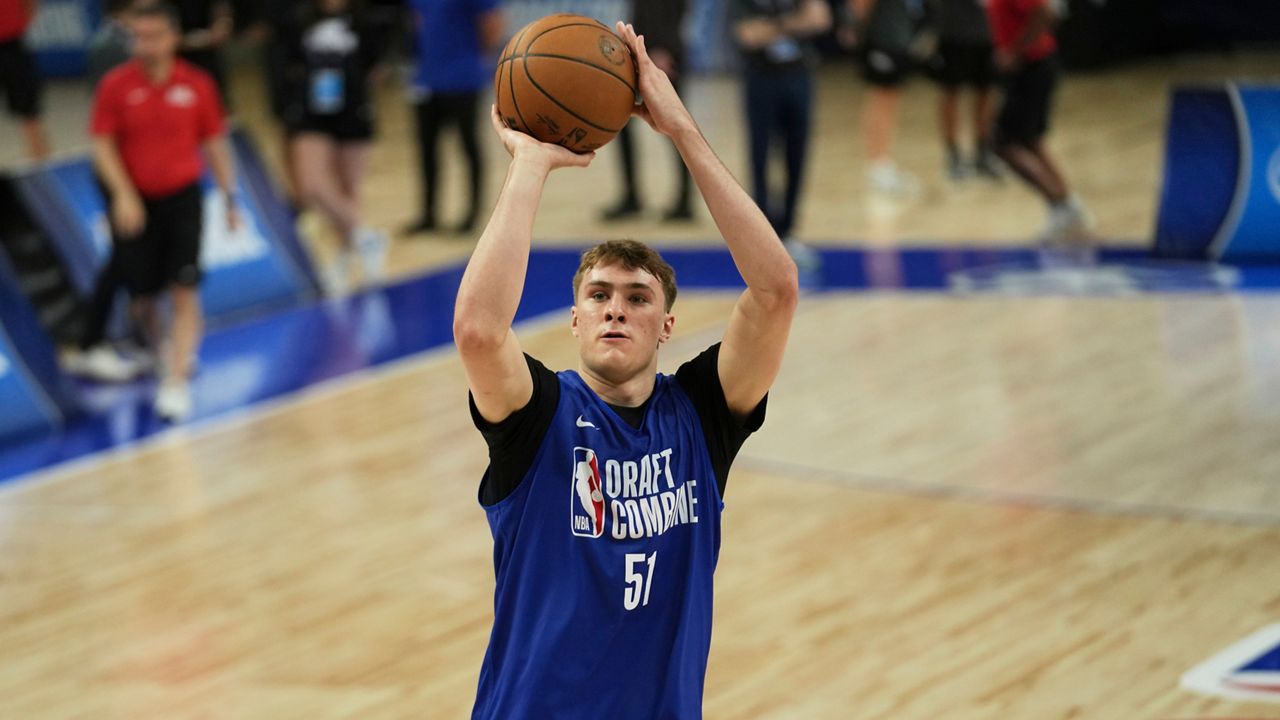
1. Cooper Flagg — Duke At just 18 and a half years old, Cooper Flagg turned in a statistically impressive freshman season (rated 7th of the last 25 years in the model) . He graded out with a 6.8 in our all-in-one model—adjusted for pace, strength of schedule. On paper, that stacks up favorably.
Rating: 6.8
Physically, Flagg added about 15 pounds of muscle and posted a 35-inch vertical at the combine, showing room for further athletic development.
His shooting became more reliable and stats surged in conference play, though the ACC competition raised some skepticism. Also the fact he played nearly all of his minutes at the power forward which impacted how teams guarded him. Although he projects as a quality wing.
His feel for defense and versatility at 6’9″ position him as a rare two-way threat for his age, although there were less blocks and steals than anticipated.
Projection: Whether he becomes the number one option or a high-level complementary star, Flagg’s value and trajectory is pointing straight up.
2. Dylan Harper — Rutgers At 19.3 years old, Dylan Harper brings a rare blend of size (6’6″) and multi-level scoring ability. He graded out with a 5.5 in our model, comfortably near the top of the class.
Rating: 5.5
Harper’s versatility and feel for the game allow him to create off the dribble with natural pacing and scoring ability.
His defense is still developing, but his size and bloodlines (his father was a respected NBA defender) bode well for his future.
Projection: Harper’s adaptability makes him a compelling option for any team in need of perimeter scoring and playmaking.
3. VJ Edgecombe — Baylor A 6’5″ athlete with elite perimeter defense, Edgecombe averaged 2.5 steals and a block per game. He graded out with a 5.7 in our model, ahead of Harper.
Rating: 5.7
His offensive game is still developing, but his athleticism, defense, and rebounding at the wing make him an intriguing long-term project.
Projection: If he continues to improve his offensive game, Edgecombe could become a key two-way contributor at the next level.
4. Ace Bailey — Rutgers Standing at 6’9″ (little smaller than listed), Ace Bailey combines rare physical tools with explosive athleticism. His college production was inconsistent, but he showed real scoring upside when healthy.
Rating: 4.6
Bailey still needs work as a decision-maker and ball handler, but his physicality and transition play make him an intriguing prospect.
Projection: Bailey’s raw potential could see him develop into a long-term contributor, especially in a system that allows him to thrive.
5. Khaman Maluach — Duke A 7’2″ center with impressive physical tools, Maluach brings rim protection, mobility, and shot-blocking. His performance in the African pro league (19 points, 14 rebounds) is perhaps more impressive when he had more usage vs many that were former college stars. He also made a good number of threes there. At Duke he seemed more confined to a role.
Rating: 5.1
Projection: Maluach’s youth and defensive upside make him a high-risk, high-reward prospect. With development, he could become a major asset in the NBA.
6. Jeremiah Fears — Oklahoma At 6’4″, Fears is a polished, efficient scorer with a 56% true shooting percentage. He’s solidified himself as a prospect, though his three-point shooting still needs refinement.
Rating: 4.8
Projection: Fears is a high-upside player if he can improve his long-range shooting, but his current scoring ability makes him a solid bet with his 85% free throw shooting that he has the touch to develop there.
7. Tre Johnson — Texas A 6’6″ natural scorer, Johnson’s shooting ability (nearly 40% from three) stands out. However, his ability to impact other areas of the game, such as defense and playmaking, is still in question.
Rating: 4.3
Projection: Johnson is primarily a scorer, and his long-term value will depend on how much he can expand his game beyond just shooting.
8. Kon Knueppel — Duke At 6’7″, Knueppel excels as a shooter with elite basketball IQ. The main concern lies in his athleticism, as he can sometimes be overwhelmed by quicker defenders.
Rating: 4.7
Projection: His shooting is NBA-ready, but his athletic limitations could hold him back unless he improves his explosiveness. Still he has a role in the NBA and a solid floor.
9. Kasparas Jakucionis — Illinois A 6’6″ on-ball guard, Jakucionis displays excellent poise, passing, and basketball IQ. His shooting isn’t great, but his size and feel for the game give him a solid foundation.
Rating: 4.3
Projection: Jakucionis may not have the highest ceiling, but his floor is high enough to make him a valuable contributor in the right system.
10. Thomas Sorber — Georgetown A 6’10” big man, Sorber is a strong, physical presence who can block shots and finish around the rim. His free-throw shooting (73%) suggests he could develop a three-point shot.
Rating: 4.5
Projection: Sorber’s mix of size and smart play makes him a solid prospect with a clear path to an NBA role.
11. Collin Murray-Boyles — South Carolina At 6’8″, Murray-Boyles is an energy guy with a great motor. His skills are average, and shooting sub par but his size and effort make him a potential long-term project. He rates out nearly off the charts in the model and is as young as many of this years freshmen. Ideally, he wouldn’t be a high pick otherwise for me given the archetype of player he is.
Rating: 6.5
Projection: His size and work ethic give him a high floor, but he needs to develop more consistent skills to make an impact at the next level.
12. Asa Newell — Georgia A 6’11” athletic big, Newell has physical tools and is showing signs of a developing jump shot.
Rating: 5.9
Projection: Another player that rates out very well. Raw but promising, Newell’s physical profile and offensive potential make him an intriguing long-term project. The rim defense could be the question.
13. Jase Richardson — Michigan State At 6’1″, Richardson size at the combine has been disappointing but he has athleticism and rates out well.
Rating: 4.8
Projection: Richardson’s steady, consistent play could make him a safe bet, though his lack of size limits his ceiling and the role he can be in. I’m not sure he projects as a true point guard which he kind of needs to be to max his ceiling at 6-1.
14. Derik Queen — Maryland A 6’10” big, Queen is polished offensively but underwhelms defensively. His versatility and intelligence give him a chance in the NBA. The major draw back is the age, he’s already 20.5 though most don’t realize that.
Rating: 5.3
Projection: Queen’s offensive game could make him a valuable role player, but he’ll need to improve defensively to reach his full potential.
15. Will Riley — Illinois Riley, at 6’8″, has had an up-and-down start to his career. His physical tools give him a solid foundation. He wasn’t started but 9 of 35 by Underwood, which is somewhat of a red flag.
Rating: 4.1
Projection: Riley’s potential could be unlocked with the right development, and his versatility is appealing for future growth. Still pretty young at 19.4 years old.
16. Labaron Philon — Alabama A crafty scorer at 6’4″, Philon excels as a facilitator but needs to improve his shooting.
Rating: 4.6
Projection: With solid playmaking and scoring potential, Philon could develop into a high-level contributor if his shooting improves.
17. Egor Demin — BYU At 6’9″, Demin stands out for his playmaking ability, posting six assists per game at his size.
Rating: 4.2
Projection: His playmaking ability is rare for his size, and if he can improve his scoring, Demin could become a valuable role player.
18. Joan Beringer — Cedevita Olimpija (Slovenia)
Height: 7’0″
Age: 18.5
Strengths: Mobile with a soft touch, showing “unicorn” potential.
Weaknesses: Still raw and needs time to adjust to a higher level of competition.
Rating: No official rating yet, but posted strong advanced stats in Europe.
Projection: A name to watch as he develops his skills.
19. Liam McNeeley — UConn
Height: 6’7″
Age: 19.5
Strengths: A versatile two-way wing with defensive potential and strong instincts in scoring, passing.
Rating: 3.4
Projection: A well-rounded, defensive-minded player who fits into many systems, but needs to refine his offensive game.
22. Johni Broome — Auburn
Height: 6’10”
Age: 22.9
Strengths: Excellent mobility, physicality, and strong defense. Averaged double-digit points and rebounds in the SEC.
Rating: 8.4
Projection: A polished prospect, ready to contribute right away. His age limits his ceiling but gives him a very high floor. For a team selecting in the 20’s he’s one of the highest rated players in the model of the last 25 years, and did it vs one of the strongest SOS ever played and hurt much of the season.
21. Adou Thiero — Arkansas At 6’7″, Thiero is a defensive juggernaut with significant room for growth on the offensive side. He’s younger than you would think as well at 21.1 year old, and for a wing he rates out highly. The three point shooting needs to improve.
Rating: 5.7
Projection: Thiero’s elite defense could carry him to a key role, but he’ll need to refine his shooting and offensive skills.
Others of Interest
Darrion Williams — Texas Tech
Height: 6’7″
Age: 22.1
Strengths: Versatile, hard-nosed, strong defensive presence, high basketball IQ.
Weaknesses: Needs refinement in his offensive consistency.
Rating: 4.9
Projection: A defensive force and all-around contributor with leadership qualities at Texas Tech.
Noa Essengue — Ratiopharm Ulm (Germany)
Height: 6’10”
Age: 18.4
Strengths: Impressive size and athleticism with solid performances in Germany.
Weaknesses: Needs to improve his shooting significantly.
Rating: 5.0
Projection: A highly intriguing prospect with physical tools but needs development, especially in his shooting.
Hugo Gonzalez — Real Madrid
Height: 6’7″
Age: 19.4
Strengths: Smooth, dynamic guard with maturity and high-pressure experience.
Weaknesses: Limited minutes in ACB, needs consistency and more playing time.
Rating: 4.7
Projection: A polished player with high potential but needs more experience to fully develop.
Kam Jones — Marquette
Height: 6’4″
Age: 22.7
Strengths: Skilled scorer, versatile, strong leadership and shooting.
Weaknesses: Limited upside due to age, but solid production.
Rating: 5.2
Projection: A first-round talent with the ability to contribute immediately despite being older.
Maxime Raynaud — Stanford
Height: 6’10”
Age: 22.2
Strengths: Floor-spacing, 37% shooting from deep, unselfish play, basketball IQ.
Weaknesses: Age may limit some teams’ interest in younger prospects.
Rating: 4.6
Projection: A versatile forward with solid potential to contribute both offensively and defensively.
Ryan Kalkbrenner — Creighton
Height: 7’0″
Age: 23.4
Strengths: Elite shot-blocker and rim protector, expanding offensive game.
Weaknesses: Lack of offensive versatility and age could limit ceiling.
Rating: 6.7
Projection: A potential rotational big man with defensive prowess and offensive potential.
Chaz Lanier — Tennessee
Height: 6’4″
Age: 23.5
Strengths: Sharpshooter with the ability to stretch the floor.
Weaknesses: Limited versatility in defense and playmaking.
Rating: 5.1
Projection: A mature prospect with immediate NBA potential as a floor spacer, but lacks defensive and playmaking skills.
Weaknesses: Needs improvement in rebounding, defense, and ball-handling.
Rating: 3.8
Projection: An offensive talent who needs to round out his game for a successful NBA career.
Hunter Dickinson — Kansas
Height: 7’2″
Age: 24.6
Strengths: Strong post player, offensive versatility, mid-range shooting, Defense, yes I said defense.
Weaknesses: Moving feet in space
Rating: 6.8
Projection: A skilled traditional big man with the potential to contribute in the NBA, though playing in a drop coverage defense similar to Brook Lopez is key to his success. He’s anchored 3 top 20 college defense including two in the top 8 with some near elite rim defense. He should be ready to help a team taking a flyer in the 2nd round.