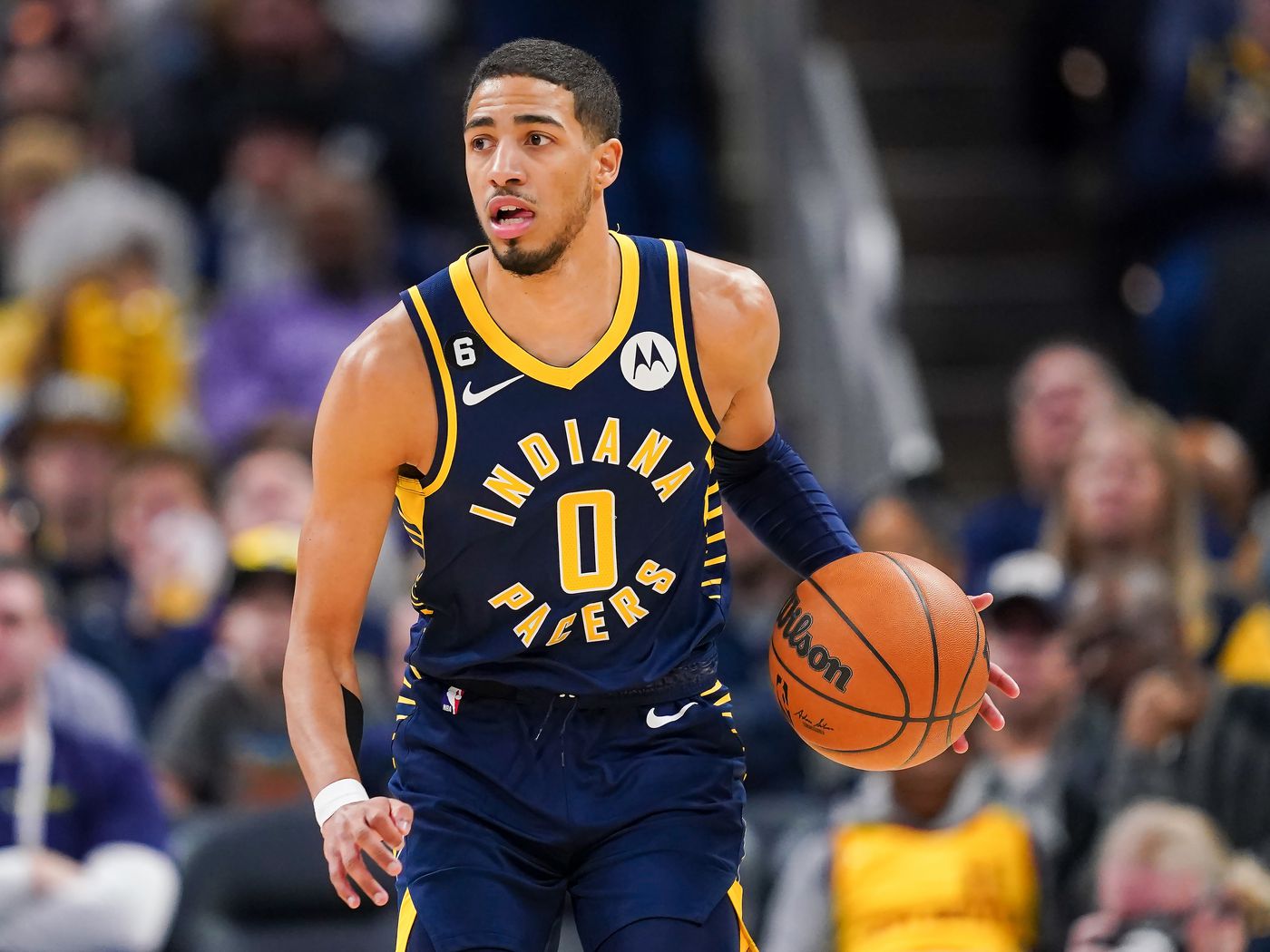
Offensive Ratings are how many points your team scores in 100 possessions. Nine of the top 10 offensive Rating seasons in NBA history are currently happening. The 2023 Sacramento Kings who broke the record last season are the only other team in the top 10.
What is perhaps even more scary is the typical trend in basketball is for offenses to struggle more early in the season and progressively enhance their performance as the season unfolds. These number could improve even more.
Historically, the NBA average has maintained an offensive rating ranging between 102 and 108 for many seasons, which was still the established norm as recently as 2018. However, there has been a consistent significant uptick in offensive efficiency since then, with the average offensive rating over the past two seasons surging to 115 offensive ratings.
NBA
Average Offensive Rating
2015
105.6
2016
106.4
2017
108.8
2018
108.6
2019
110.4
2020
110.6
2021
112.3
2022
112.0
2023
114.8
2024
115.5
To put this into perspective the Golden State Warriors broke the all time team NBA record at 115.0 in 2019 with the historically great team with Step Curry, Kevin Durant, Klay Thompson, Draymond Green and Demarcus Cousins who had all been recent all stars. That makes some sense at least. Now the NBA average of all teams is a half of a point more than that. That same Warriors team number would rank 17th this season. That’s only 5 seasons ago.
Teams have been breaking the record each year ever since. Recent offensive achievements by teams such as the Sacramento Kings, who set a record last year, the Indiana Pacers, and numerous other teams on track to shatter it, lack the captivating pedigree to even respect it. It’s teams that likely will go out or did in the first round.
The Long Ball
The average percentages for both open and closely guarded three-point shots have remained nearly identical since the NBA began collecting this data. However, what has notably changed is the sheer volume and frequency with which players attempt these open shots.
Undoubtedly, players have refined their skills, and offenses schemes have evolved by building upon previous advancements. One of the most significant developments is the incorporation of three-point shooting by post players, marking a substantial addition to the game. The difficulty players take three pointers at today has also been developed as well even beyond the open shots offenses are generating. Not only have the three pointers generated offense themselves, but they open up driving lanes and space on the inside or players to score more easily around the rim as well.
Home runs captivated audiences with the infamous phrase ‘Chicks dig the longball.’ Undoubtedly, offense and made three pointers not only thrills fans but also drives ticket sales. It is our contention that the NBA could draw valuable lessons however from the offensive surge in baseball during the steroid era and start combatting their own offensive explosion.
Repeating History’s Mistakes
Those who do not know the history are doomed to repeat it. What’s currently unfolding in the NBA mirrors the numerical explosion witnessed during that time. Several teams are now consistently surpassing historical offensive rating records each year. The significance of averaging 20 or 30 points has diminished compared to its status just 5 or 10 years ago.
Reflecting on my youth in the late 80s and early 90s, I eagerly scrutinized the statistics on my baseball cards and diligently followed the morning box scores to track home run hitters. I distinctly remember Cecil Fielder hitting 50 home runs and the significance it held, marking the first time in 13 years such a milestone had been reached or that I even knew it was possible. I had never seen 50+ on a card.
It felt monumental and sparked speculation about a challenger to the all-time record of 61 home runs. I vividly analyzed Mark McGwire’s home run rate, contemplating if he could surpass the record if he maintained good health. He was on pace in some of those early years. However, it wasn’t long before players like Brady Anderson, previously not known for hitting home runs, started hitting 50, and others approached and eventually shattered the revered record. Since then, my interest in baseball waned after witnessing these records being smashed.
Similarly, the NBA faces a risk as many of its modern benchmark records set by players like Michael Jordan to come under threat. While the momentary excitement is undeniable, consider the 35 points per game, a feat achieved by only two players in the modern era, Jordan and Kobe. Both needed over 40 minutes to hit. James Harden hit that mark by using a “gather step” and living on foul drawing flops. Joel Embiid is accomplishing it while playing fewer than 35 minutes a game, exemplifies the shifting landscape.
The Rules
I don’t think you want to try to limit three pointers in any way. If a player is capable of make three’s and offense are designed to generate them that’s great. It’s a totally legitimate. What isn’t is all the other advantages players today receive carrying the ball, traveling, gather steps, and BS foul drawing that wasn’t allowed years ago. No one is saying you have to dribble under the same rules Bob Cousey did either. Just dial back the rules to where they were 10, 15, or 20 years ago. Many of the things players today get away with steps on or carrying is ridiculous. It’s hard to compare with what was allowed 20 or 30 years ago with what players get away with creating the space. Start combating the advantages there.
The NBA has already taken measures to address tactics utilized by players like James Harden to achieve a 36 points per game average, such as the gather step, drawing fouls, and using the arm as a club. In our perspective, the NBA should further enforce those rules to revert to a prior era, prior to the increased offensive strategies.
While the surge in three-point attempts is a trend that likely won’t regress, and probably continue to increase preserving the integrity of the game entails curbing blatant instances of traveling that are currently considered permissible. Enforcing the rules should dial back some of the advantages and defensive breakdowns that lead to better three point looks.
By reducing these occurrences and enforcing stricter penalties for flopping, the historical significance of statistical records can be better preserved. It’s acceptable for players or teams to surpass records by utilizing existing skills like three-point shooting at varying levels, but what should be discouraged are actions such as taking three steps to gather before a shot or dribbling minimally before attempting a layup. The rules should be swung more in this moment to favor defenders just to slow this explosion down some. If they don’t where does this go to on the trajectory it’s currently on. At a point it just becomes to much of an advantage to the offense, and I think fans still appreciate defense as well and having some historical record you can compare.